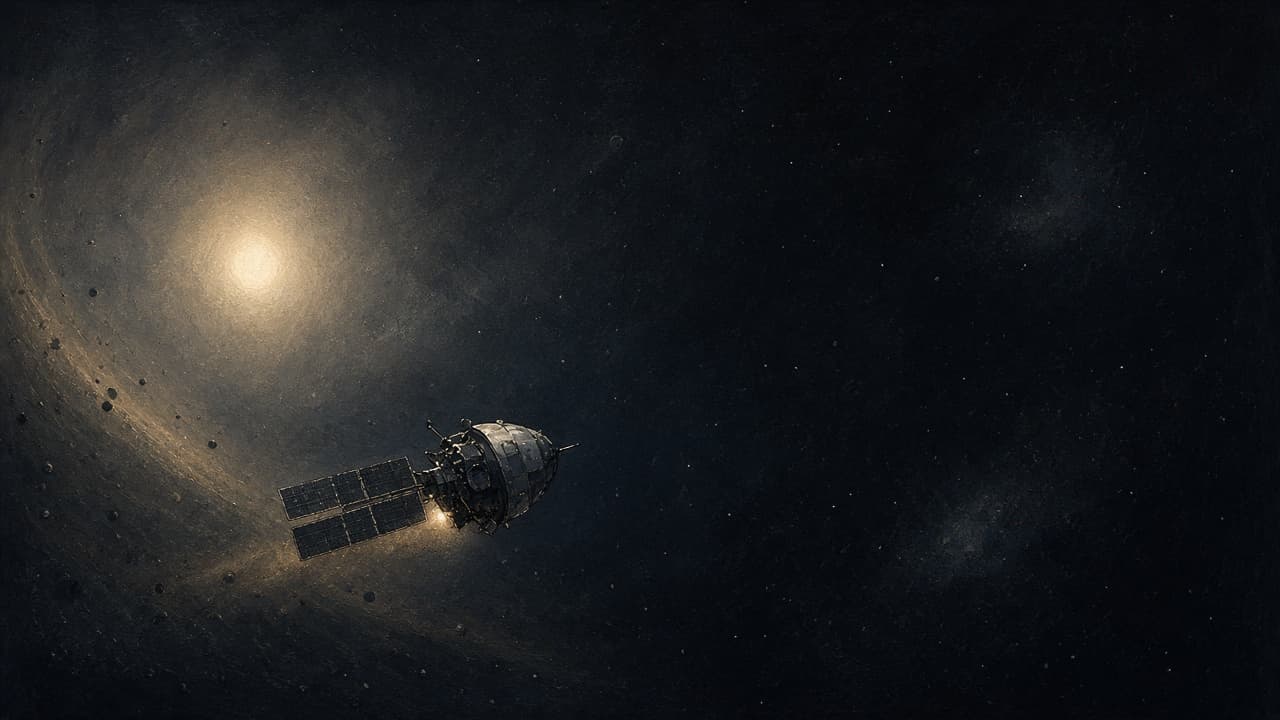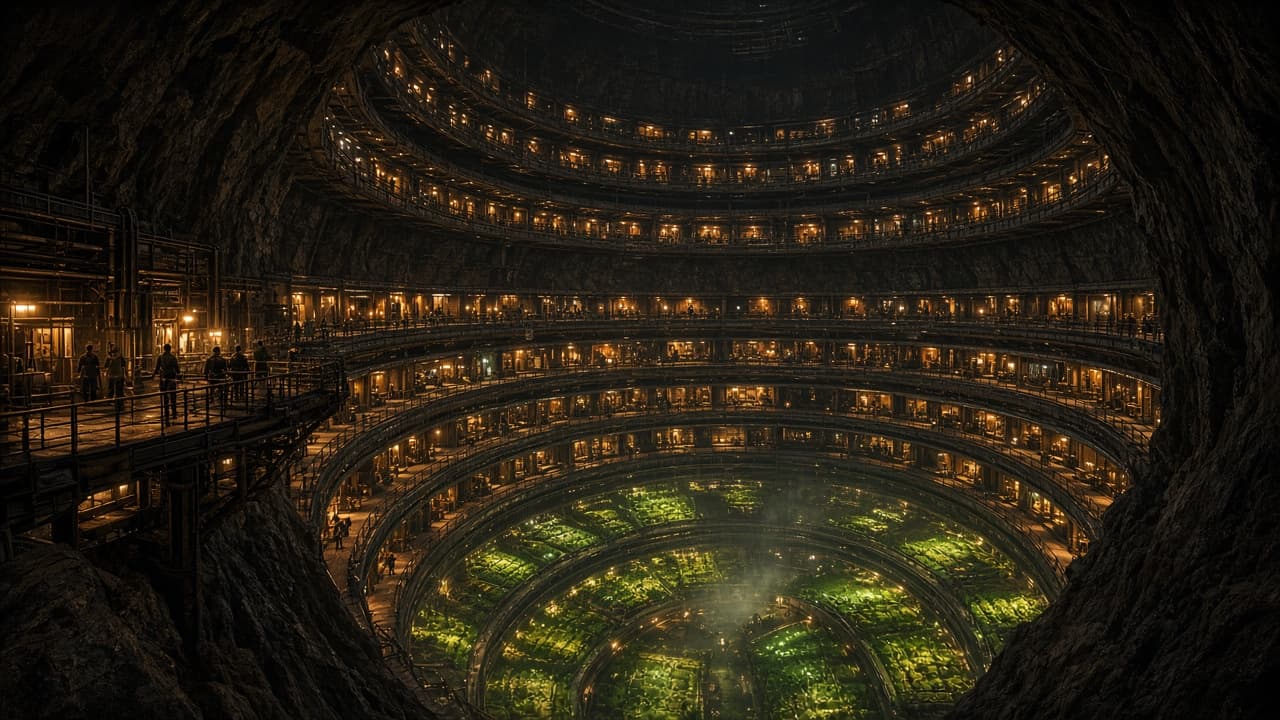
What if humanity had to leave the surface of Earth — but instead of escaping to another planet, we went underground?
Apple TV+'s Silo presents a civilization living deep beneath the Earth's surface. Generations of people grow up inside an enormous underground structure, relying on artificial systems for food, water, energy, air, and almost every part of daily life.
The story is fictional, but the engineering problem behind it is surprisingly real. Scientists and engineers are already studying closed-loop life support, underground habitats, controlled-environment agriculture, autonomous construction, and technologies designed to keep humans alive in environments where the outside world may be hostile.
That raises a fascinating question: if humanity ever needed to build a civilization that could survive without depending heavily on the surface, how close are we to having the necessary pieces?
The world of Silo depends on a remarkable assumption: humans can construct an artificial environment capable of supporting an entire civilization for generations. That means producing food, recycling water, maintaining breathable air, generating energy, managing waste, manufacturing essential equipment, and keeping thousands of people alive without relying on the surface.
No existing project has demonstrated a civilization capable of doing all of this indefinitely. But individual pieces of the problem are being investigated today, particularly in research connected to isolated environments and future space settlements.
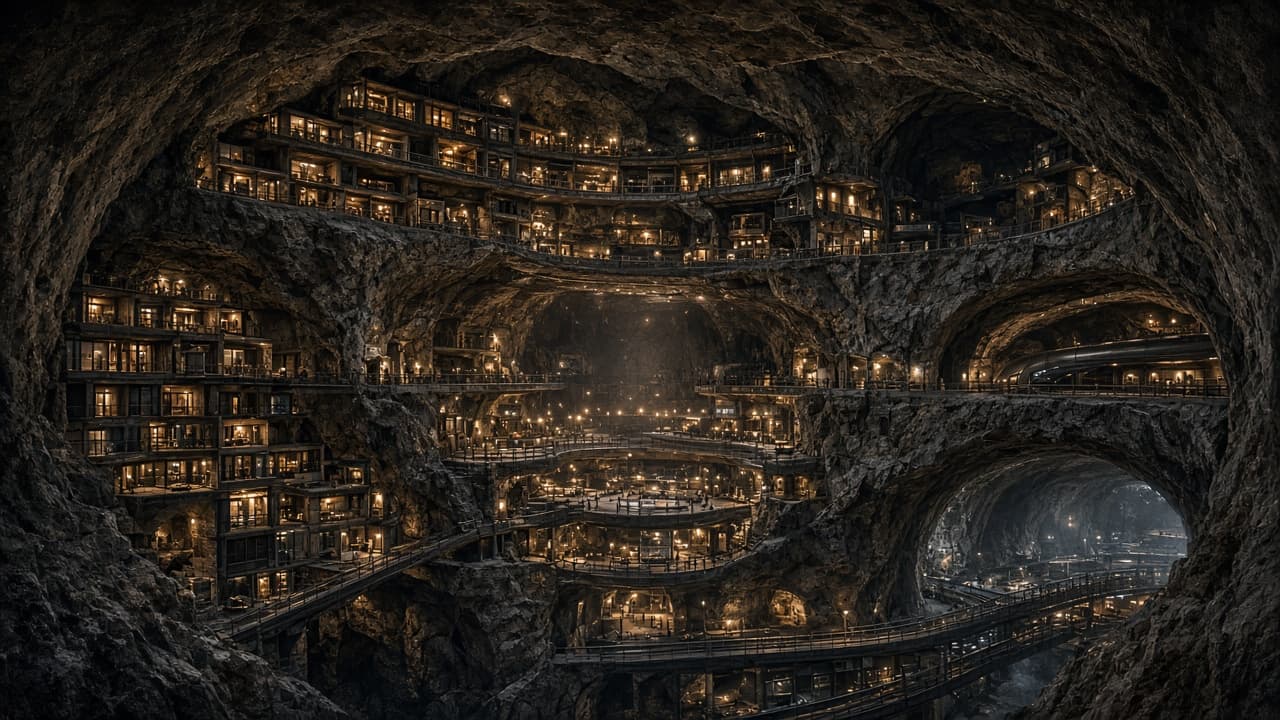
On Earth, underground construction can provide protection from some surface hazards, while on the Moon and Mars the idea becomes even more attractive. Lunar and Martian environments expose humans to radiation, temperature extremes, dust, and other challenges that can make surface habitats difficult to maintain.
Researchers have therefore investigated natural underground structures such as lunar lava tubes as potential locations for future habitats. Instead of transporting an enormous protective shell, a future settlement could potentially use the surrounding rock as part of its shielding.
A building is relatively easy compared with an ecosystem. A true Silo-like civilization would have to continuously recycle the materials required for human life.
- Water would need to be purified and reused.
- Carbon dioxide would need to be removed from the atmosphere.
- Oxygen would need to be replenished.
- Human and agricultural waste would need to be processed.
- Food would need to be continuously produced.
- Nutrients would need to remain inside the system instead of being permanently lost.
- Energy would need to be generated reliably.
This is why closed-loop life-support research for spacecraft and isolated habitats is so important. Every kilogram of water, oxygen, food, and equipment that cannot be recycled eventually becomes a supply problem.
In an isolated civilization, water would no longer simply be a utility. It would be part of the life-support system. The same water could pass through drinking systems, agriculture, sanitation, industrial processes, purification equipment, and back into circulation.
Air would be equally important. The civilization would need continuous monitoring of oxygen, carbon dioxide, humidity, contaminants, and pressure. A failure in an ordinary city might affect one building; a failure in a completely enclosed settlement could threaten the entire population.
Traditional agriculture depends on sunlight, open land, weather, and a large biological ecosystem. Underground civilization would have to replace many of those natural systems with technology.
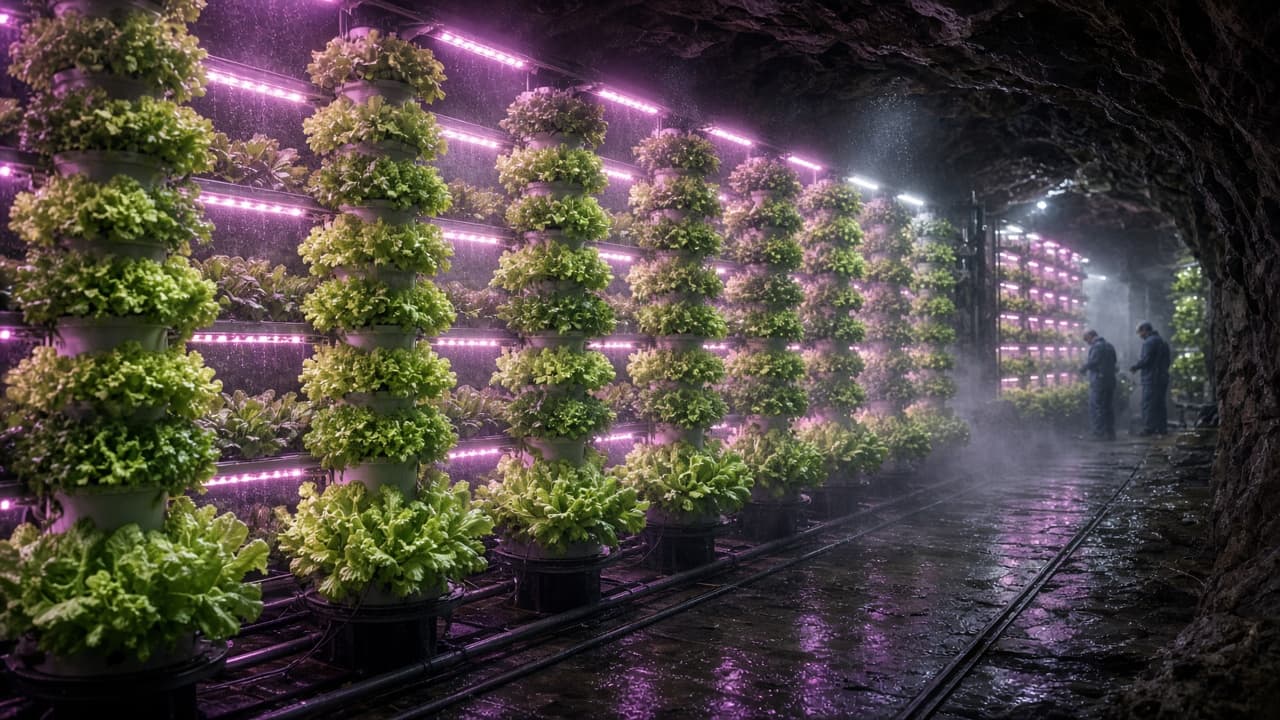
- Hydroponic farming
- Vertical agriculture
- Artificial lighting
- Controlled temperature and humidity
- Recycled nutrients
- Automated monitoring
- Potential microbial or alternative food production
The challenge is scale. Feeding a small research crew is very different from feeding a city of tens of thousands of people for generations.
Almost every system inside an underground civilization would consume energy. Pumps would move water. Lights would grow crops. Ventilation would circulate air. Computers would monitor infrastructure. Machines would manufacture replacement parts. Heating and cooling systems would maintain habitable conditions.
This creates a fundamental requirement: the civilization would need an extremely reliable energy source and enough redundancy to survive failures.
| Approach | Potential advantage | Major challenge |
|---|---|---|
| Nuclear power | High energy density and continuous generation | Complexity, safety, fuel and maintenance requirements |
| Geothermal | Potentially continuous underground energy source | Strongly dependent on local geology |
| Surface solar | Renewable energy source | Requires surface infrastructure and energy transmission underground |
This is where the concept becomes particularly interesting. A large underground civilization would produce enormous amounts of data. Sensors could continuously monitor air quality, water chemistry, crop health, energy consumption, structural stress, temperature, machinery, and countless other variables.
AI systems could potentially help coordinate these systems by identifying anomalies, predicting equipment failures, optimizing energy use, and managing complex resource flows.
A Silo-like structure would have to withstand enormous mechanical stresses while containing residential areas, farms, factories, power systems, water treatment facilities, transportation, medical facilities, storage, and emergency infrastructure.
Modern engineering can already create enormous underground tunnels, mines, transportation systems, and facilities. The unprecedented part would be integrating all of these systems into one civilization designed to operate continuously for generations.
What a self-contained underground civilization would need
Build the habitat
Construct or excavate a protected underground environment with redundant structural and emergency systems.
Create life support
Develop systems capable of continuously recycling air, water, nutrients, and waste.
Establish food production
Create controlled agricultural systems that can operate without natural sunlight and external weather.
Secure energy
Provide reliable primary and backup energy sources capable of supporting every major system.
Automate infrastructure
Use sensors, robotics, software, and potentially AI to monitor and maintain critical infrastructure.
Create long-term governance
Develop institutions capable of managing resources, population, information, education, maintenance, and conflict across generations.
Engineering may eventually solve many physical problems. Human society is harder to predict.
Imagine someone born inside an underground civilization who has never experienced an open sky. Their understanding of the outside world would depend almost entirely on information provided by the society around them.
After several generations, history could become increasingly dependent on archives, education systems, institutions, and cultural memory. This creates questions about information control, social stability, trust, inequality, and the psychological effects of permanent confinement.
Future lunar and Martian settlements could force humanity to solve many of the same problems on a smaller scale. Researchers are investigating habitats, life-support systems, resource utilization, food production, robotics, and methods for protecting astronauts from hostile environments.
If humans eventually establish permanent settlements away from Earth, they will need to become much better at creating artificial environments that can support life with limited external resources.
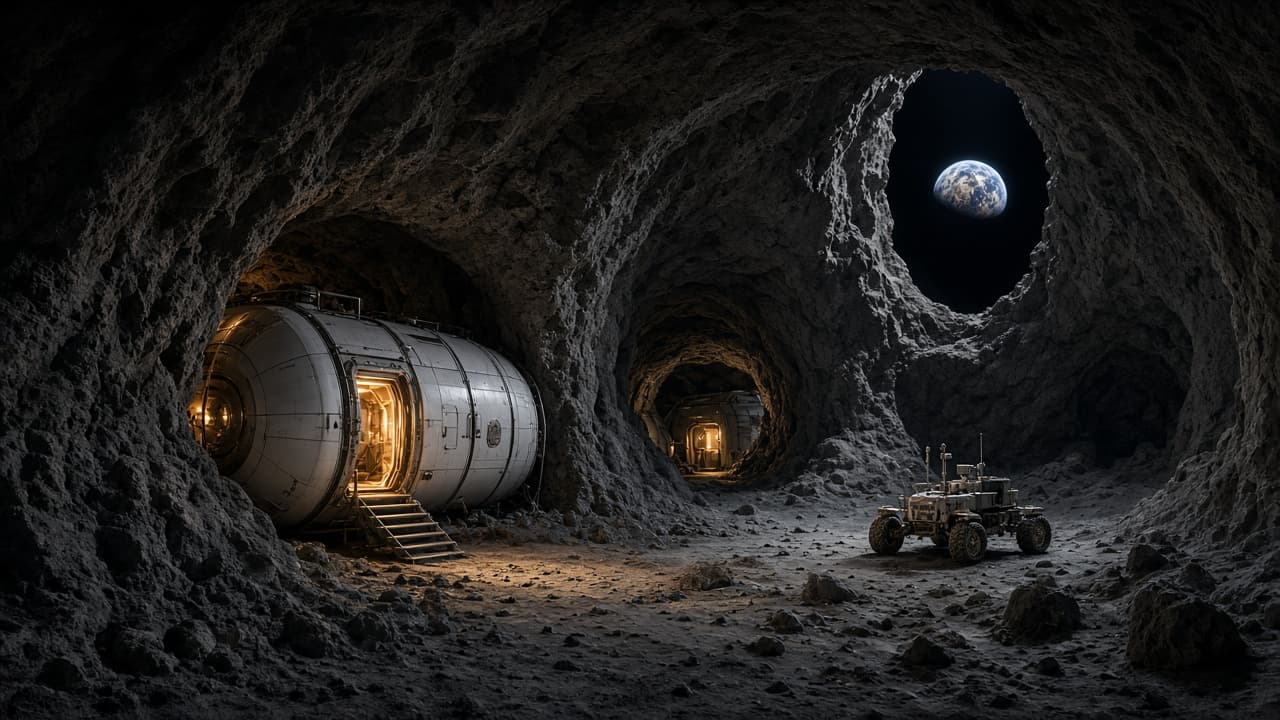
Parts of the concept are technologically plausible. Humans already operate complex underground infrastructure, closed environmental systems, controlled agriculture, automated monitoring systems, and long-duration isolated habitats.
But a civilization that can remain almost completely independent from the surface for centuries has not been demonstrated. The unknowns become much larger when the system must support thousands of people, reproduce industrial capacity, replace aging infrastructure, maintain ecological stability, and survive political and social changes across generations.
| Silo concept | Real-world status | What remains uncertain |
|---|---|---|
| Underground habitat | Existing engineering capability and active research | Civilization-scale integration |
| Closed-loop life support | Actively researched and demonstrated in limited contexts | Very long-term stability at city scale |
| Indoor food production | Existing technology | Economic and biological sustainability at huge scale |
| AI infrastructure management | Existing AI and automation research | Reliable autonomous control of critical civilization systems |
| Generational isolation | Studied through analog missions and isolated environments | Centuries-long social and psychological consequences |
This is where Silo changes from a science-fiction story into a civilization thought experiment.
If humanity had enough warning before a global environmental catastrophe, underground settlements could theoretically become part of a broader survival strategy. But survival would depend on much more than finding shelter. Humanity would need to preserve agriculture, manufacturing, medicine, scientific knowledge, education, energy production, and the ability to repair its own infrastructure.
A bunker can protect people for a period of time. A civilization requires the ability to reproduce everything it needs to continue existing.
- Closed-loop system
- A system designed to recycle resources internally so that materials such as water, air, nutrients, and waste remain in circulation instead of continuously requiring replacement from outside.
The most important question may not be whether we can build an underground city. We can already build remarkable underground structures.
The deeper question is whether humans can create an artificial ecosystem and society capable of surviving independently for generations.
That problem connects underground cities on Earth with future habitats on the Moon and Mars. In both cases, humans must replace parts of Earth's natural environment with technology.
What the Silo idea gets right — and where it stretches
What works
- Underground environments can provide protection from some surface hazards.
- Closed-loop technologies could reduce dependence on external supplies.
- Automation could help monitor complex infrastructure.
- The same technologies could contribute to future Moon and Mars habitats.
What doesn't
- Building a civilization-scale underground ecosystem would be extremely complex.
- Long-term energy and maintenance requirements would be enormous.
- Food and nutrient recycling at population scale remain challenging.
- Generational isolation could create major social and psychological challenges.
- A completely self-sufficient underground civilization has not yet been demonstrated.
Silo is fictional, but the problem it presents is surprisingly real: how could humans create a livable world when the natural environment can no longer provide everything we need?
Today, no one has built a civilization capable of operating independently underground for centuries. But researchers are gradually solving pieces of the puzzle through closed-loop life support, controlled agriculture, underground habitat research, robotics, and space analog missions.
Perhaps the strangest possibility is that the first true Silo-like civilization may not be built because Earth becomes uninhabitable. It may be built because humanity decides to leave Earth — and discovers that living underground is one of the safest ways to survive on another world.