For most of human history, we have wondered whether someone else created life somewhere in the universe. But what if the future question is completely different: what if humanity becomes the civilization that creates life?
Science fiction has repeatedly imagined ancient civilizations capable of manipulating biology, designing organisms, or spreading life across the cosmos. The idea sounds impossibly advanced—until you look at what modern biology is already beginning to do.
Humans can edit DNA, engineer microorganisms, synthesize biological components, study organisms that survive extreme environments, and build increasingly sophisticated artificial ecosystems. None of this means we can create an alien ecosystem today. But it changes the question from 'Could this ever happen?' to a more interesting one: 'What would we need to learn before it could happen?'
NASA's astrobiology research already connects synthetic biology with future space habitats, while planetary-protection research studies how Earth organisms might survive and reproduce in extraterrestrial environments.
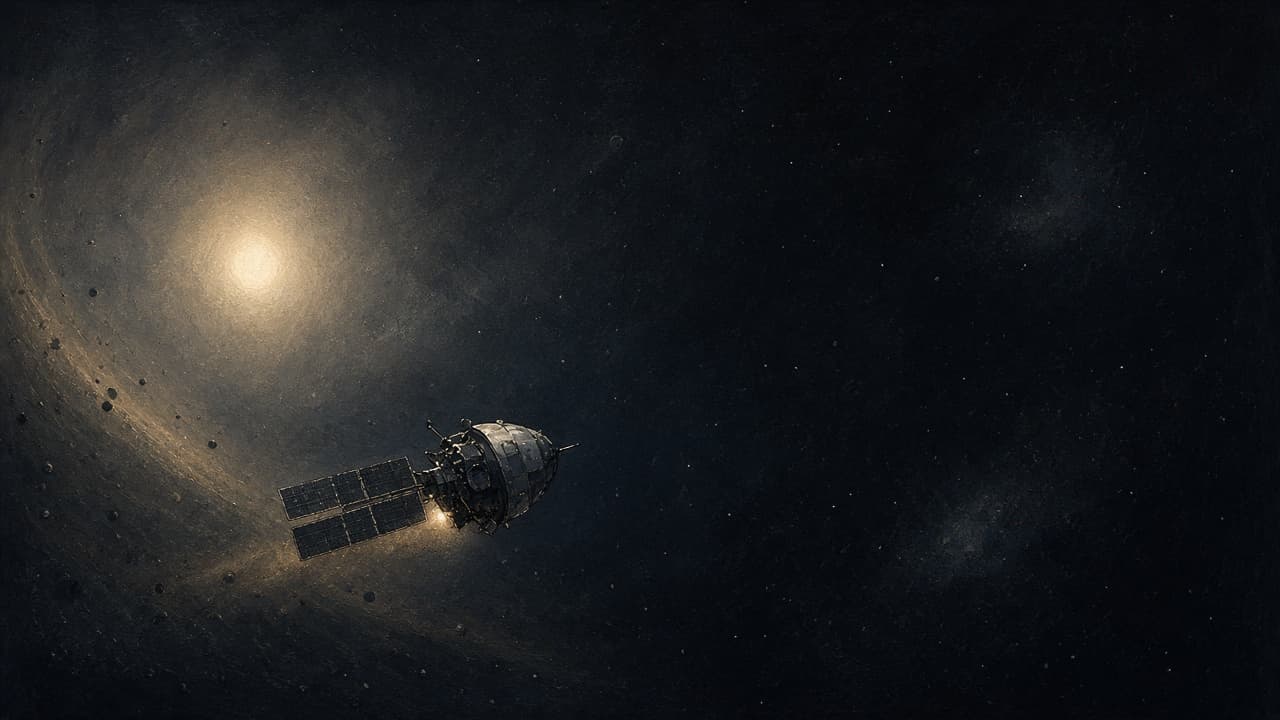
Imagine a spacecraft arriving on a barren planet hundreds of millions of kilometers from Earth. There are no forests, oceans, animals, or cities. The planet appears lifeless.
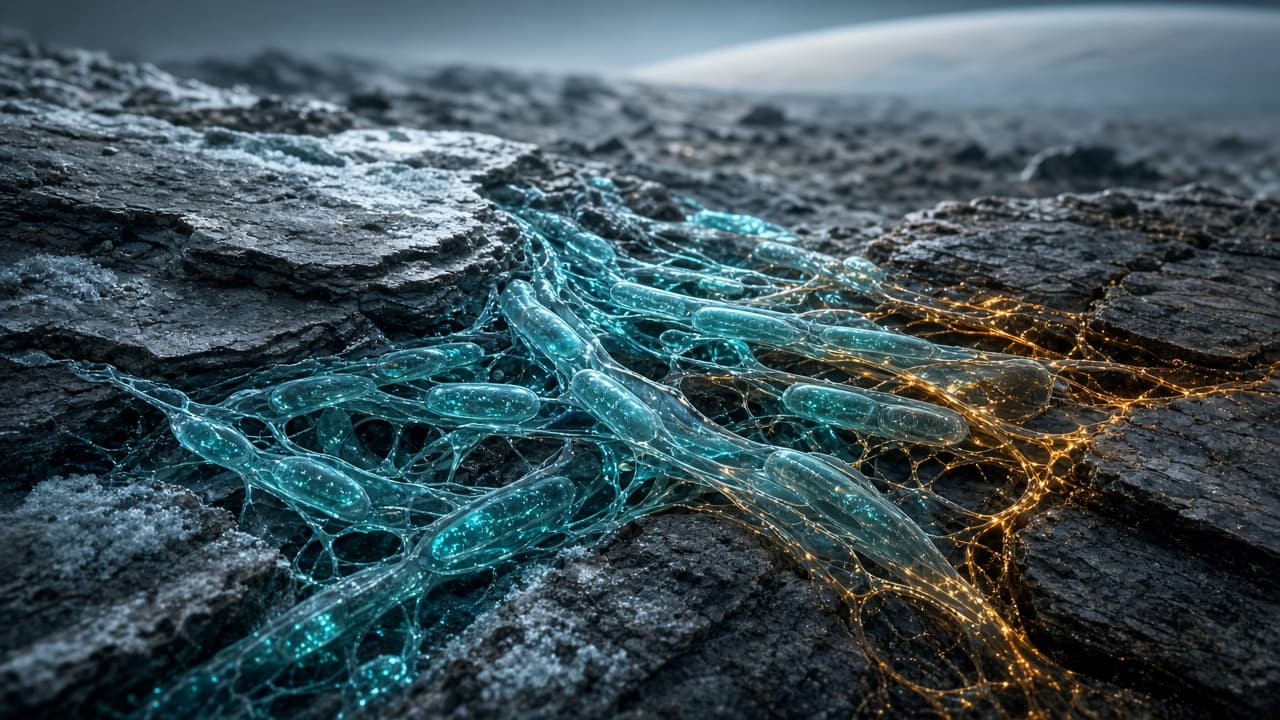
But inside the spacecraft is something much smaller: carefully selected microorganisms engineered to survive the local environment.
They are released into a controlled environment. Some die. Others survive. Over thousands or millions of years, descendants adapt, interact with minerals and atmospheric chemistry, and perhaps become the foundation of a completely new biological system.
This is not something humanity can currently do. It is a thought experiment built from real scientific fields. And it raises one of the strangest questions in astrobiology: could a technological civilization eventually become a source of life for other worlds?
The first important distinction is that designing life is not the same as creating life from nothing.
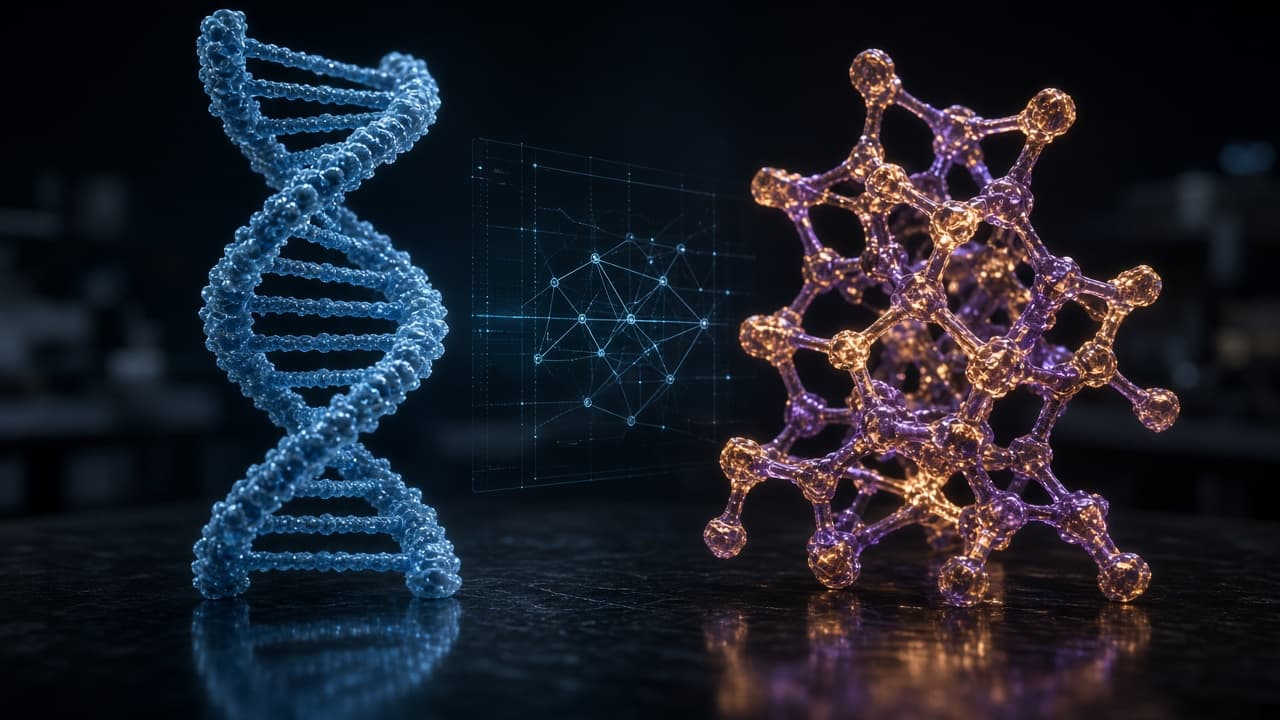
Modern synthetic biology combines biological engineering, genetics, chemistry, computation, and molecular biology to modify or construct biological systems. Scientists can alter organisms, design genetic circuits, produce biological molecules, and investigate how cells behave when their biological instructions are changed.
NASA's Ames Research Center describes synthetic biology as a field that can contribute to sustainable solutions for closed systems such as the International Space Station and future space habitats.
On Earth, ecosystems perform countless useful functions without human-designed machinery. Plants capture carbon dioxide and produce oxygen. Microorganisms recycle nutrients. Fungi break down organic matter. Bacteria transform chemicals and maintain biological cycles.
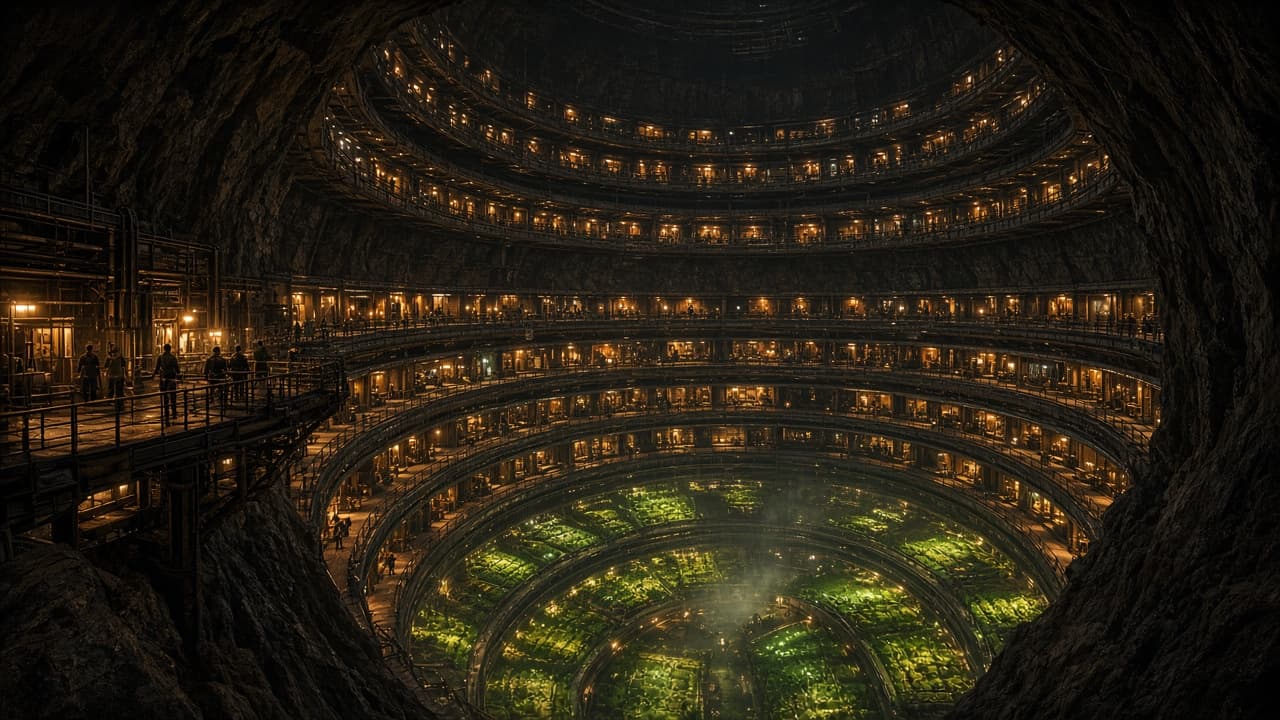
A future space settlement could potentially use engineered organisms as part of its infrastructure.
- Microorganisms could help recycle waste.
- Algae or plants could contribute to oxygen and food production.
- Engineered microbes could potentially assist with resource extraction.
- Biological systems could help process carbon dioxide.
- Microorganisms could contribute to soil development in controlled environments.
This is one reason biology may become as important to future space exploration as rockets and computers.
Before asking whether humans could engineer life for another planet, scientists first need to understand how life survives extreme conditions.
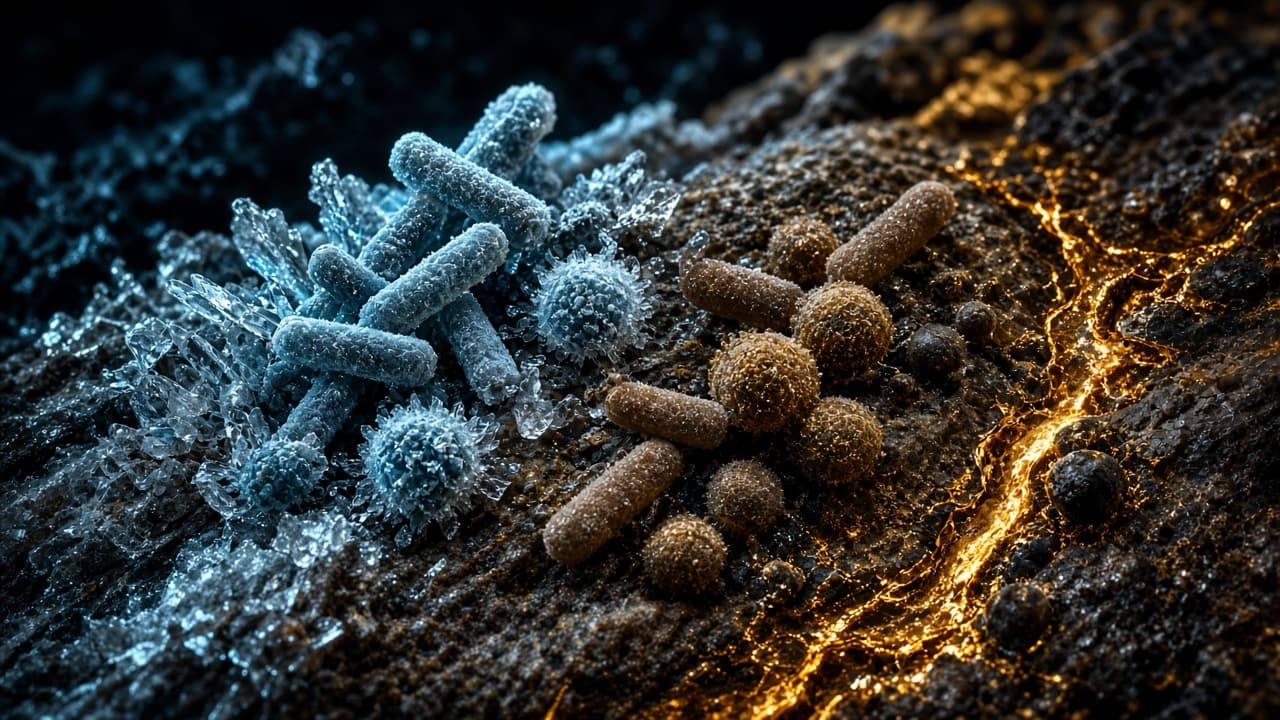
Earth contains microorganisms capable of surviving environments involving intense radiation, high salt concentrations, extreme temperatures, pressure, acidity, and severe lack of nutrients. Studying these organisms helps researchers investigate the limits of life and identify environments where biological survival might be possible beyond Earth.
NASA's planetary-protection research specifically investigates organisms with unusual survival capabilities and examines whether microbes could survive and reproduce under conditions found on Mars and icy worlds.
Mars is one of the most obvious places to imagine this thought experiment. It contains water ice, geological evidence of ancient water activity, and environments that scientists study for clues about whether the planet could once have supported life.
But there is a major complication: we do not yet know whether Mars has indigenous life, either surviving today or preserved from its ancient past.
That uncertainty is one reason planetary protection exists. Scientists want to avoid introducing Earth organisms that could contaminate potential Martian environments or make future life-detection experiments harder to interpret. The National Academies has repeatedly examined the problem of forward contamination of Mars by Earth organisms.
Panspermia is the broad idea that life, or the ingredients or precursors of life, could potentially travel between planetary environments.
Natural mechanisms could theoretically include impacts ejecting material from one planet and transferring it to another, while some speculative versions consider deliberate transport by an advanced civilization.
The deliberate version is sometimes called directed panspermia: the hypothetical intentional spreading of microorganisms or biological material to another world.
- Directed panspermia
- A hypothetical concept in which a civilization intentionally transports microorganisms or biological material to another planetary environment to establish or influence life there.
The important point is that directed panspermia is a concept, not an established explanation for the origin of life on Earth.
This is where the idea becomes more interesting than simply asking whether aliens created us.
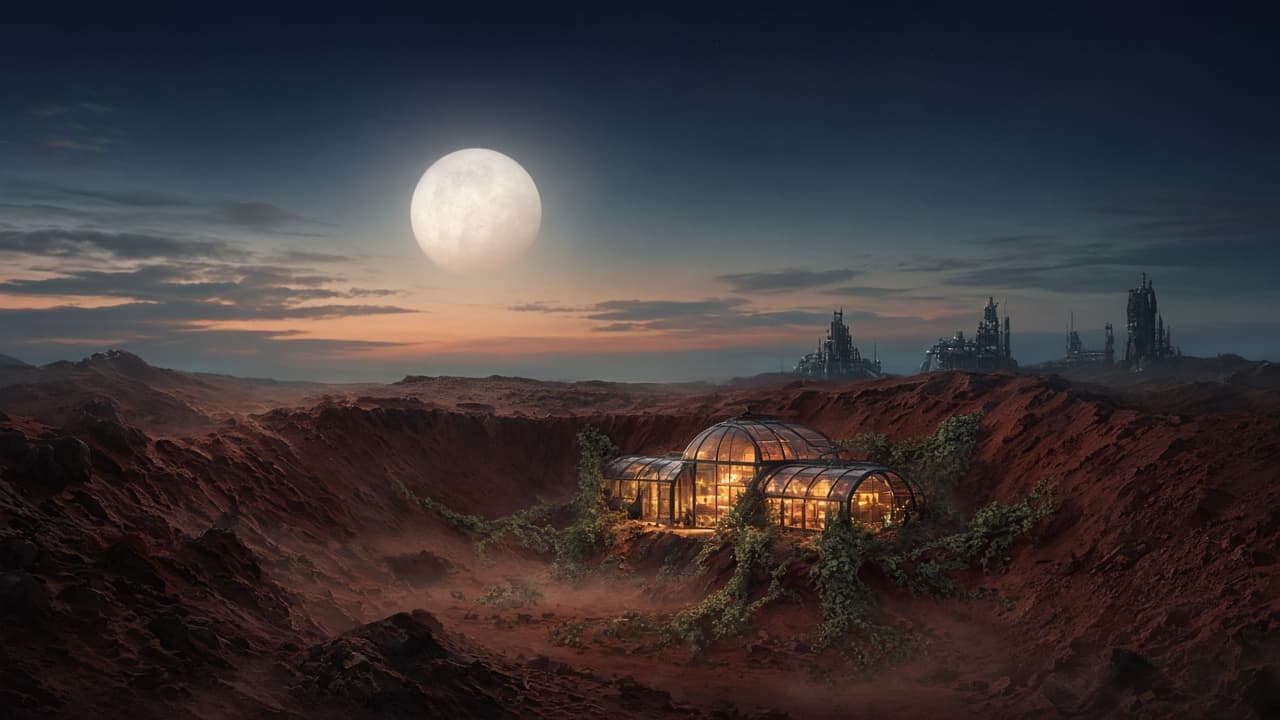
Imagine humanity survives long enough to become a multi-planetary civilization. We eventually discover a planet with no detectable life but with conditions that could potentially support biological activity.
Instead of asking whether aliens might have done something similar to Earth, future humans could ask whether we should do it ourselves.
| Scenario | What happens | Scientific status |
|---|---|---|
| Natural panspermia | Life or biological material naturally travels between worlds | Hypothesis under scientific investigation |
| Directed panspermia | An advanced civilization deliberately transports biological material | Speculative concept |
| Human biological engineering | Humans deliberately design organisms for specific environments | Biological engineering is real; extraterrestrial ecosystem creation is speculative |
A future civilization would probably not begin by sending trees, animals, or anything resembling an Earth ecosystem.
The first candidates would more plausibly be simple organisms with useful characteristics: microorganisms capable of surviving particular temperatures, radiation levels, chemical environments, or resource limitations.
The objective would not necessarily be to create an alien Earth. It could be something much more controlled: a biological system designed to perform one specific function.
- Produce useful biological compounds.
- Process a waste product.
- Help recycle nutrients.
- Interact with minerals or local resources.
- Support a controlled habitat.
- Study how biology adapts to another world.
Suppose scientists engineered an organism to survive in a specific environment. That would not necessarily mean its descendants would remain exactly the same.
Mutation, natural selection, competition, environmental changes, and interactions with other organisms could alter its evolutionary trajectory.
A carefully designed biological system could therefore become unpredictable over long periods.
Here is the fascinating twist: space agencies are currently trying to prevent something that resembles the first step of our thought experiment.
Spacecraft can carry microorganisms from Earth. Some microbes may be unusually resistant to environmental stress, and scientists study whether such organisms could survive parts of the journey or persist in extraterrestrial environments.
NASA's current planetary-protection research includes studying microbial survival, detecting spacecraft-associated organisms, and reducing the risk that Earth life could contaminate potentially habitable extraterrestrial environments.
In other words, before humanity seriously considers intentionally introducing biology to another world, it first has to understand how easily biology might accidentally get there.
This question has no simple scientific answer because it depends on what we discover about the target world.
If a planet is completely sterile, intentionally introducing life could be viewed as a form of biological experimentation. But if indigenous life exists—even microscopic life—the same action could destroy or permanently alter an independent evolutionary history.
That is why planetary protection is not simply about protecting spacecraft experiments. It is also about preserving the scientific and biological integrity of other worlds. The National Academies has highlighted the possibility that Earth organisms could interfere with investigations of Martian life and has emphasized research to reduce those uncertainties.
From Earth Biology to Extraterrestrial Ecosystems
Today
Understand Life
Scientists study Earth's biodiversity, extremophiles, genetics, origins of life, and the limits of biological survival.
Near Future
Engineer Biological Systems
Synthetic biology and biotechnology become increasingly capable of modifying organisms for specific purposes.
Future
Closed Space Ecosystems
Biological systems become integrated into long-duration habitats and extraterrestrial settlements.
Far Future
Design for Another World
A mature civilization might eventually investigate whether organisms could be deliberately adapted to environments beyond Earth.
Very Far Future
Life Beyond Earth
Humanity could potentially become capable of influencing the biological evolution of another world—but this remains speculative.
There is another possibility that could completely change the story.
Humanity may discover extraterrestrial life before it ever becomes capable of deliberately creating an ecosystem elsewhere.
If that happens, one of the most important scientific questions would be whether the alien organisms share a common biochemical ancestry with life on Earth or represent an independent origin.
Finding an independent second example of life would be extraordinary because it would tell us that life can arise more than once in the universe. Finding biological similarities that strongly suggested a connection would raise a completely different set of questions.
Imagine that humanity eventually becomes an interplanetary civilization. We discover a barren world. We study it for centuries. We learn its chemistry, climate, geology, and potential for life.
Then, after enormous scientific progress, we deliberately introduce a carefully designed biological system.
Millions of years pass. The descendants of that biology evolve into something completely different. One day, another intelligent civilization discovers the planet, finds evidence of ancient life, and asks the same question humanity has asked for centuries: Who started it?
The answer could be hidden billions of years earlier in the actions of a civilization that no longer exists.
| Idea | Current scientific status | Why it matters |
|---|---|---|
| Genetic engineering | Real | Humans can modify biological systems. |
| Synthetic biology | Real and developing | Scientists can design and modify biological components and systems. |
| Extremophile research | Active research | Shows how life can survive extreme environments. |
| Microbial survival in space-related environments | Active research | Helps determine the limits of life and contamination risks. |
| Panspermia | Scientific hypothesis | Explores whether life or its ingredients could move between worlds. |
| Directed panspermia | Speculative | Considers deliberate transportation of biological material by a civilization. |
| Creating a complete extraterrestrial ecosystem | Speculative | Would require capabilities far beyond current biotechnology. |
If humanity ever tried this
What works
- Could eventually help humans create biological systems for isolated space habitats.
- Could expand our understanding of how life adapts to different environments.
- Could potentially contribute to long-term human settlement beyond Earth.
- Could provide new experiments for studying biology and planetary evolution.
What doesn't
- Could permanently contaminate another world's environment.
- Could interfere with the search for indigenous extraterrestrial life.
- Engineered organisms could evolve in unexpected ways.
- Long-term ecological consequences would be extremely difficult to predict.
- Current technology is nowhere near creating a complete independent extraterrestrial ecosystem.
For thousands of years, humanity has looked into the night sky and wondered whether another civilization might exist somewhere beyond Earth. We have imagined alien worlds, ancient creators, and civilizations capable of manipulating life itself.
But perhaps the most interesting version of that story has not happened yet.
Perhaps one day humanity will become advanced enough to carry biology beyond Earth—not simply as passengers, but as engineers. If that ever happens, we will face a strange reversal: instead of asking whether aliens created life, another civilization might someday look at the life we left behind and ask where its creators came from.
That future is highly speculative. But the scientific path leading toward it—synthetic biology, extremophile research, astrobiology, planetary protection, and closed biological systems—is already real.
And perhaps that is the most fascinating part: the boundary between science fiction and science is not a wall. It is a moving line.