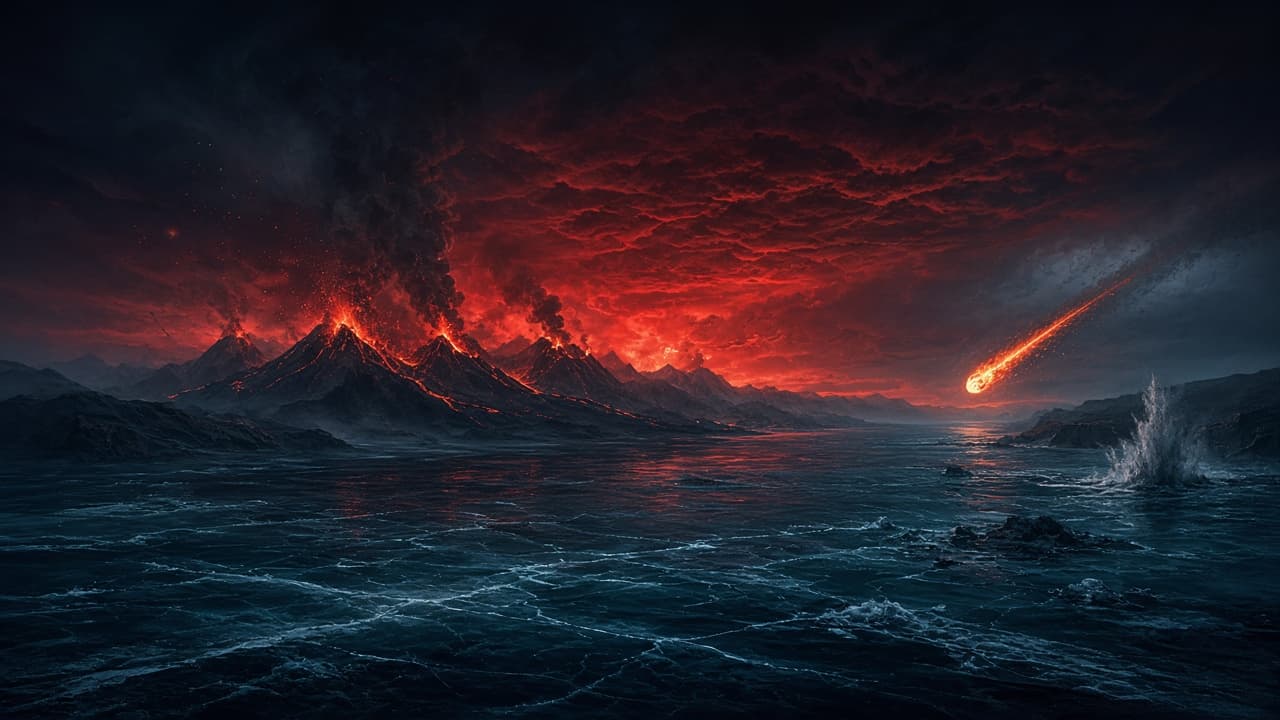
Imagine living on a planet where almost everything around you suddenly begins to disappear.
Earth looks remarkably stable from a human perspective. Continents move slowly, climates change over generations, and ecosystems can appear permanent. But over geological time, our planet has experienced moments of extraordinary destruction.
Scientists identify five major mass extinction events in the fossil record. During these episodes, unusually large proportions of species disappeared in relatively short geological intervals. Oceans changed, climates shifted, habitats collapsed, and entire branches of the evolutionary tree were cut away.
Some were driven primarily by climate and ocean changes. Others were associated with enormous volcanic eruptions. One became famous because a giant asteroid struck Earth. Together, these events reveal something fascinating: life is remarkably fragile—and remarkably resilient.
A mass extinction is more than an unusually bad period for wildlife. It represents a global biological crisis in which a large fraction of species disappears over a geologically short period. The consequences can continue for millions of years.
The five traditionally recognized events occurred at very different points in Earth's history. The organisms alive during each event were also dramatically different from the animals and plants we know today.
The Big Five Mass Extinctions
~444 million years ago
Ordovician-Silurian Extinction
A major extinction associated with dramatic climate and sea-level changes that devastated marine ecosystems.
~375–360 million years ago
Late Devonian Extinction
A prolonged extinction interval strongly associated with widespread environmental stress and oxygen depletion in marine environments.
~252 million years ago
Permian-Triassic Extinction
The most severe of the Big Five, associated with enormous volcanic eruptions and profound environmental change.
~201 million years ago
Triassic-Jurassic Extinction
A major extinction associated with massive volcanism during the breakup of Pangaea.
~66 million years ago
Cretaceous-Paleogene Extinction
The asteroid impact at Chicxulub triggered a global environmental catastrophe and ended the age of non-avian dinosaurs.
Around 444 million years ago, Earth entered one of its most dramatic environmental transformations. At this time, complex life was concentrated primarily in the oceans, where trilobites, brachiopods, corals, and other marine organisms dominated ecosystems.
A major glaciation developed, causing global temperatures to fall and sea levels to drop. Vast amounts of water became locked in ice, dramatically shrinking shallow marine habitats.
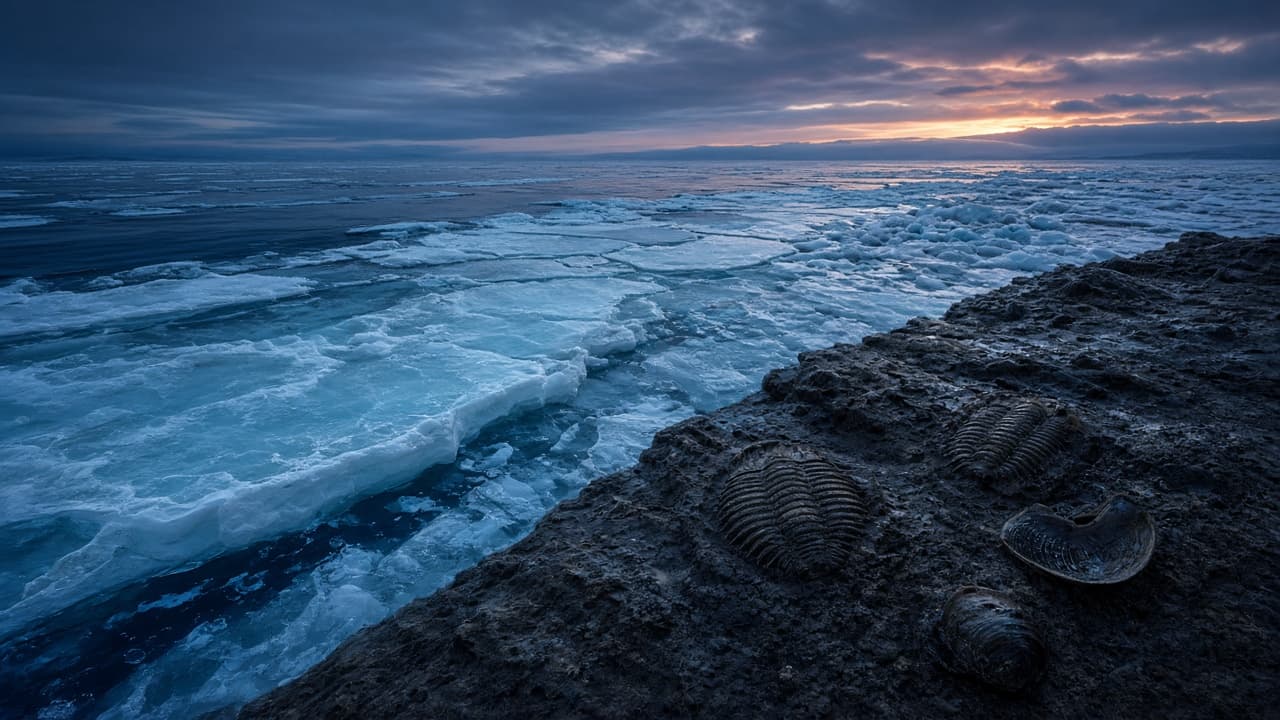
The crisis did not necessarily end with cooling. As the planet warmed again, changing ocean conditions and oxygen availability created another wave of environmental stress.
~85%
Estimated marine species loss in the Ordovician-Silurian extinction
Scientific estimates of Ordovician-Silurian extinction severity
The Devonian is sometimes called the Age of Fishes. Oceans were filled with diverse fish, reefs, and other marine organisms, while life was also becoming increasingly established on land.
Between roughly 375 and 360 million years ago, several extinction pulses severely disrupted ecosystems. One of the most important environmental problems was widespread oxygen depletion in parts of the oceans, known as marine anoxia.
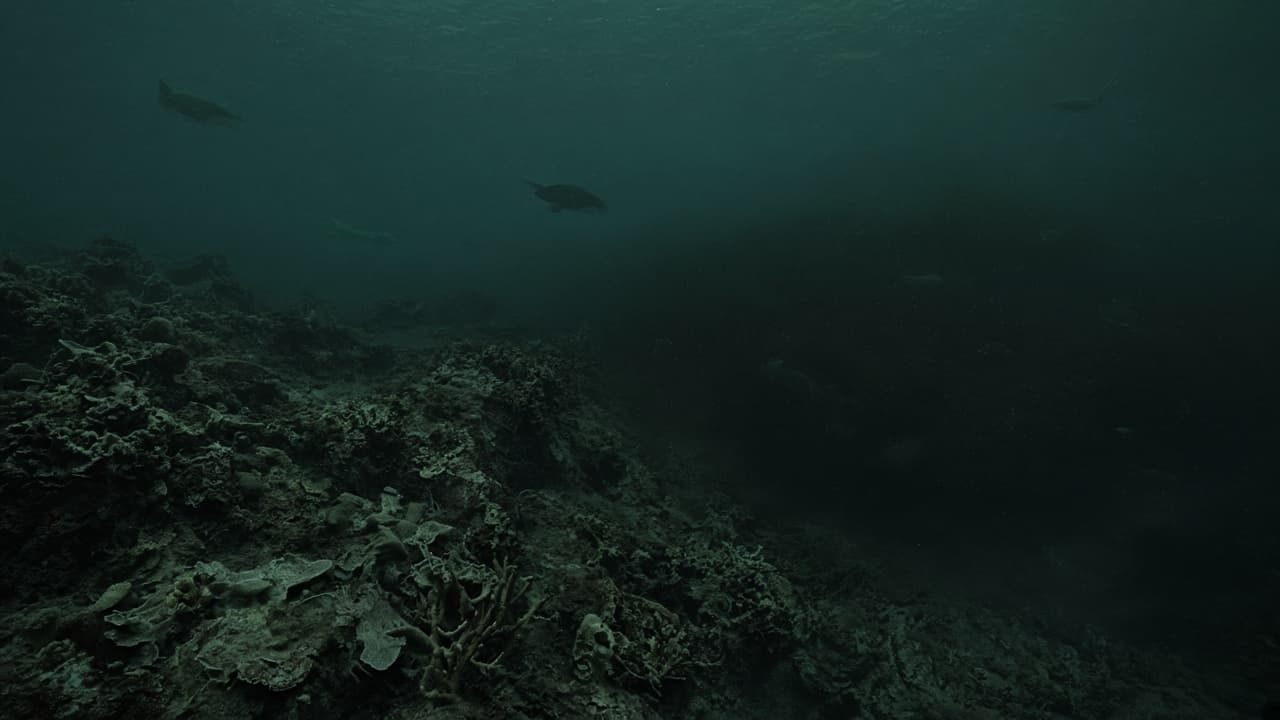
Ancient reef systems were particularly vulnerable. Large reef-building communities declined dramatically, changing marine ecosystems for millions of years.
- Marine oxygen levels became severely depleted in some regions.
- Ancient reef ecosystems suffered major losses.
- Climate and ocean chemistry changed repeatedly.
- Many marine organisms disappeared during multiple extinction pulses.
If Earth's history had a chapter that could be described as an almost complete biological reset, the Permian-Triassic extinction would be one of the strongest candidates.
Approximately 252 million years ago, Earth experienced the most severe known mass extinction of the Phanerozoic Eon. Both marine and terrestrial ecosystems suffered catastrophic losses.
One of the major drivers was enormous volcanic activity in the region now known as Siberia. The Siberian Traps erupted vast quantities of volcanic material and greenhouse gases over an extended period.
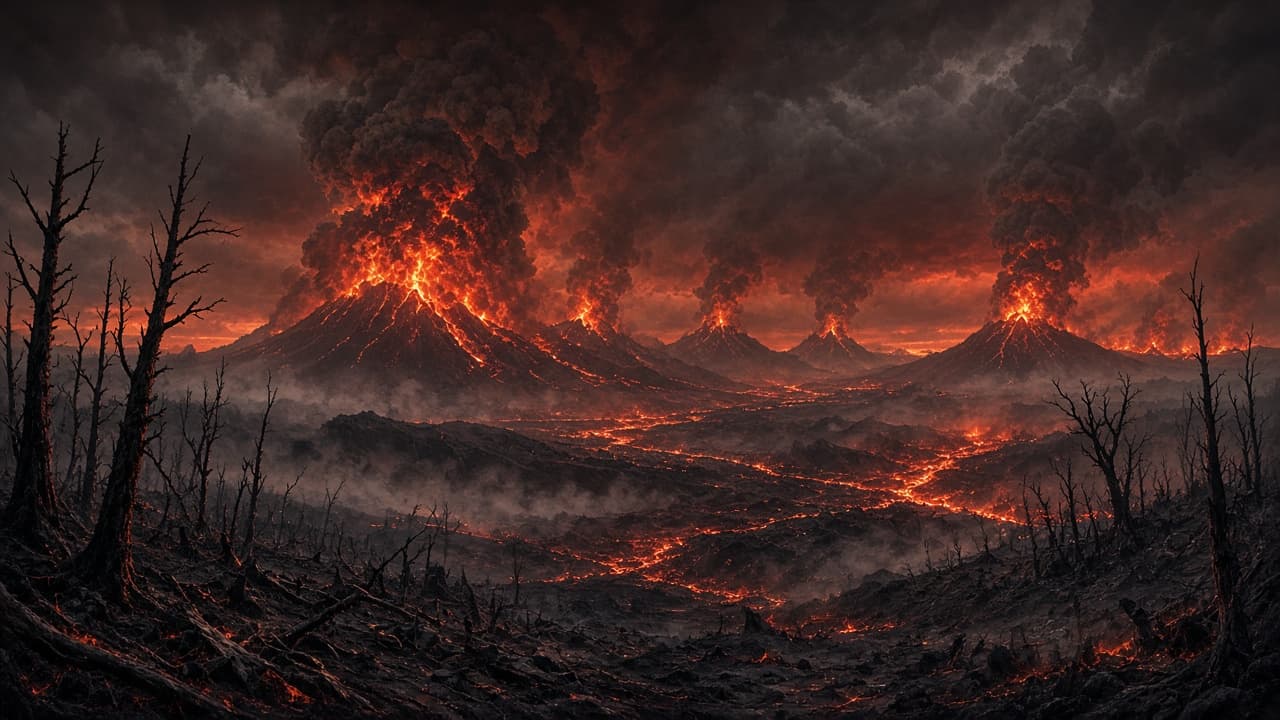
The resulting environmental changes included severe global warming, ocean acidification, oxygen depletion, and major disruptions to the carbon cycle. The planet's interconnected ecosystems were pushed far beyond normal conditions.
~96%
Estimated marine species loss in the Permian-Triassic extinction
Scientific estimates of Permian-Triassic extinction severity
The end-Permian extinction represents the largest known biodiversity crisis in Earth's history.
The frightening part was not one single disaster. It was the combination of multiple environmental stresses. Rising temperatures could destabilize ecosystems, warming oceans could hold less dissolved oxygen, and changes in ocean chemistry could make survival increasingly difficult.
Recovery was also extraordinarily slow. Ecosystems did not simply return to normal after the eruptions stopped. Rebuilding complex biological communities took millions of years.
Around 201 million years ago, another major extinction transformed Earth's ecosystems. The supercontinent Pangaea was beginning to break apart, and enormous volcanic activity accompanied the opening of what would eventually become the Atlantic Ocean.
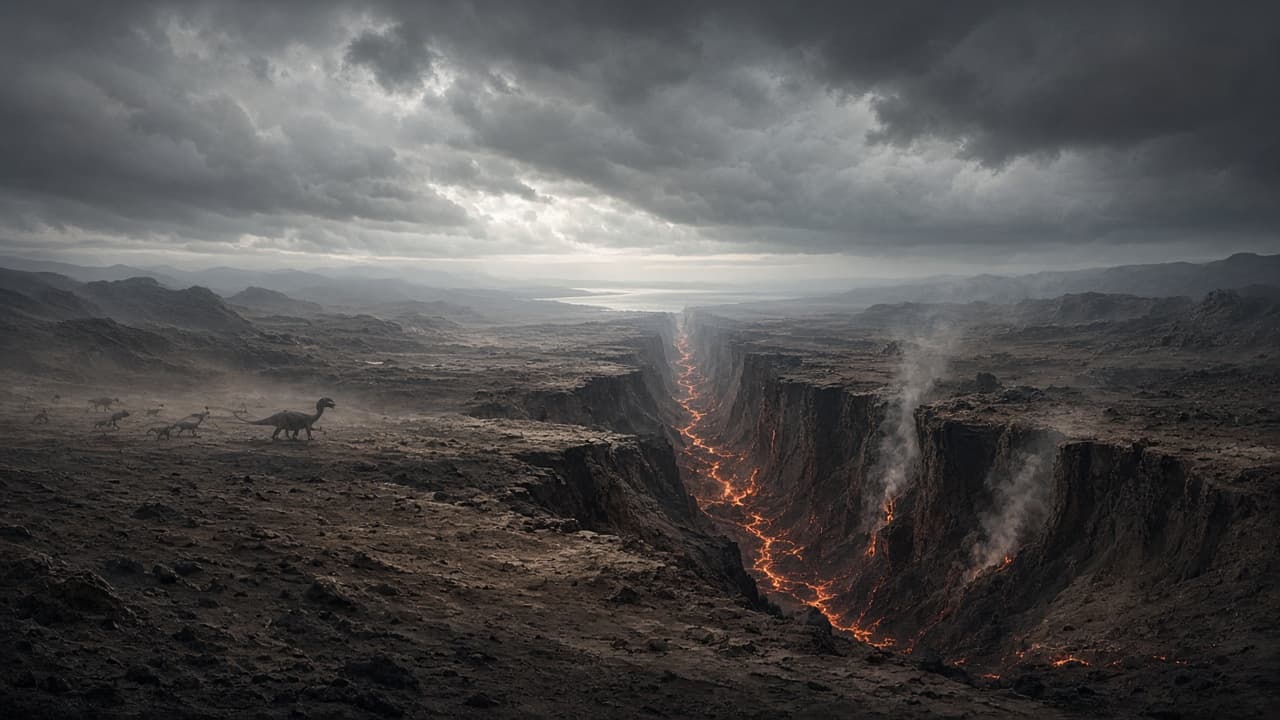
These eruptions released large amounts of carbon dioxide and other gases, contributing to rapid environmental and climate changes. Many species disappeared from both marine and terrestrial ecosystems.
The extinction also changed the balance of life on land. Several groups that had competed with dinosaurs declined or disappeared, leaving ecosystems in which dinosaurs could become increasingly dominant during the Jurassic.
The final event in the Big Five is also the most famous. Around 66 million years ago, a large asteroid struck the region of present-day Mexico near what is now the Yucatán Peninsula.
The impact created the Chicxulub crater and released enormous amounts of energy. Dust, aerosols, and other material entered the atmosphere, disrupting sunlight and photosynthesis and triggering severe global environmental changes.
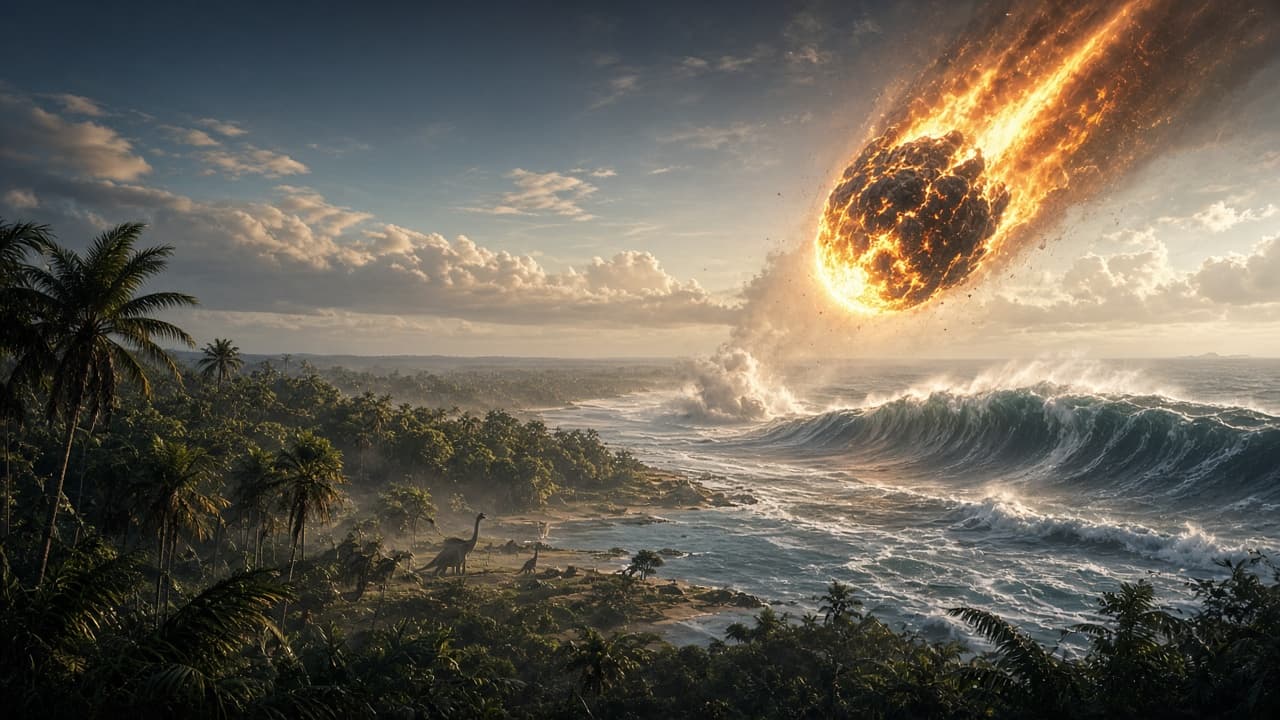
The consequences spread through food webs. Plants and microscopic photosynthetic organisms were affected, herbivores lost food sources, and predators then faced collapsing prey populations.
~75%
Estimated species loss in the Cretaceous-Paleogene extinction
Research on the K-Pg extinction
There is an important detail hidden inside the phrase 'dinosaur extinction.' Non-avian dinosaurs disappeared, but one dinosaur lineage survived: birds. Modern birds are therefore living descendants of the dinosaur lineage.
The asteroid did not simply end one chapter. It changed the evolutionary landscape. Mammals, birds, and other surviving organisms eventually diversified into ecosystems dramatically different from those that existed before the impact.
| Extinction | Approx. date | Major environmental driver |
|---|---|---|
| Ordovician-Silurian | ~444 million years ago | Glaciation, sea-level change, ocean disruption |
| Late Devonian | ~375–360 million years ago | Ocean anoxia, climate and ecosystem disruption |
| Permian-Triassic | ~252 million years ago | Massive volcanism, warming, ocean chemistry changes |
| Triassic-Jurassic | ~201 million years ago | Volcanism associated with Pangaea's breakup and climate change |
| Cretaceous-Paleogene | ~66 million years ago | Chicxulub asteroid impact and resulting global environmental disruption |
At first glance, these five events appear completely different. One involved ice, another prolonged ocean stress, another enormous volcanic eruptions, and another an asteroid.
But there is a deeper pattern: ecosystems can collapse when environmental conditions change faster or more severely than organisms can adapt.
- Rapid climate change can destabilize habitats.
- Ocean warming and chemical changes can threaten marine ecosystems.
- Loss of oxygen can create enormous biological dead zones.
- Volcanic eruptions can alter the atmosphere and global climate.
- Asteroid impacts can disrupt sunlight, climate, and food chains simultaneously.
The surprising answer is not simply 'nothing.' Life has repeatedly demonstrated an extraordinary ability to recover.
Surviving organisms inherit environments that have been radically transformed. With many competitors gone, ecological niches become available. Over millions of years, surviving lineages can diversify into forms that would have been unlikely under the previous ecological conditions.
How Evolution Responds to a Mass Extinction
Environmental Collapse
Climate, oceans, habitats, or food webs undergo severe disruption.
Mass Mortality
Large numbers of species disappear, leaving simplified ecosystems.
Survival
Some organisms possess traits or circumstances that allow them to survive the crisis.
Ecological Opportunity
Surviving species encounter habitats and resources that were previously occupied by extinct organisms.
Diversification
Over many generations, surviving lineages evolve and diversify into new ecological roles.
That depends on what you mean by terrifying.
The K-Pg extinction gives us the most cinematic scenario: a giant asteroid suddenly transforms the planet and ends the reign of the non-avian dinosaurs.
The Ordovician-Silurian extinction presents another nightmare: a world dominated by oceans rapidly experiencing glaciation, falling sea levels, and major environmental disruption.
The Late Devonian event shows how prolonged environmental deterioration and oxygen-starved oceans can dismantle ecosystems over an extended interval.
The Triassic-Jurassic extinction demonstrates the power of sustained volcanic activity and climate disruption to transform an entire planet.
But the Permian-Triassic extinction stands apart because of its sheer severity. It combined enormous environmental changes with one of the largest biodiversity losses known in Earth's history.
Human civilization exists during an unusually small slice of Earth's history. We experience seasons, decades, and centuries. Geological history operates on a radically different scale.
Over hundreds of millions of years, continents move, oceans open and close, climates transform, volcanoes reshape landscapes, asteroids collide with planets, and ecosystems are repeatedly reorganized.
The five mass extinctions remind us that today's biosphere is not permanent. The organisms surrounding us are the survivors of an extraordinarily long evolutionary experiment.
Frequently asked questions
What are the Big Five mass extinctions?
Which was the largest mass extinction?
What caused the extinction of the dinosaurs?
Did dinosaurs completely disappear?
How long does Earth take to recover from a mass extinction?
Could another mass extinction happen?
Why are mass extinctions important to study?
Earth has already survived five extraordinary biological crises. Each one changed the planet, destroyed ecosystems, and redirected evolution.
And yet, life continued.
That leaves us with a fascinating question: if Earth has repeatedly been pushed to the edge, what would the next great planetary disruption look like?
Would it come from space? From Earth's climate? From a supervolcano? Or from something we have not even imagined yet?
That is where Earth's history stops being just history—and starts becoming a warning about how dynamic our planet really is.
What mass extinctions do to the history of life
What works
- Mass extinctions create major opportunities for surviving organisms to diversify.
- They provide scientists with evidence about how ecosystems respond to extreme environmental change.
- Studying ancient extinction events helps researchers understand Earth's climate and geological history.
What doesn't
- Mass extinctions cause enormous biodiversity loss.
- Complex ecosystems can take millions of years to recover.
- The loss of species can permanently alter evolutionary trajectories and ecosystem structure.
The history of Earth is not a straight line of progress. It is a story of expansion, collapse, survival, and reinvention.
Five times, the planet experienced biological upheavals powerful enough to erase enormous portions of its biodiversity. Yet each time, surviving life eventually rebuilt ecosystems and created something new.
Perhaps that is the most fascinating lesson of the Big Five: extinction can end worlds, but it does not necessarily end life. Sometimes, it creates the conditions for an entirely different world to emerge.