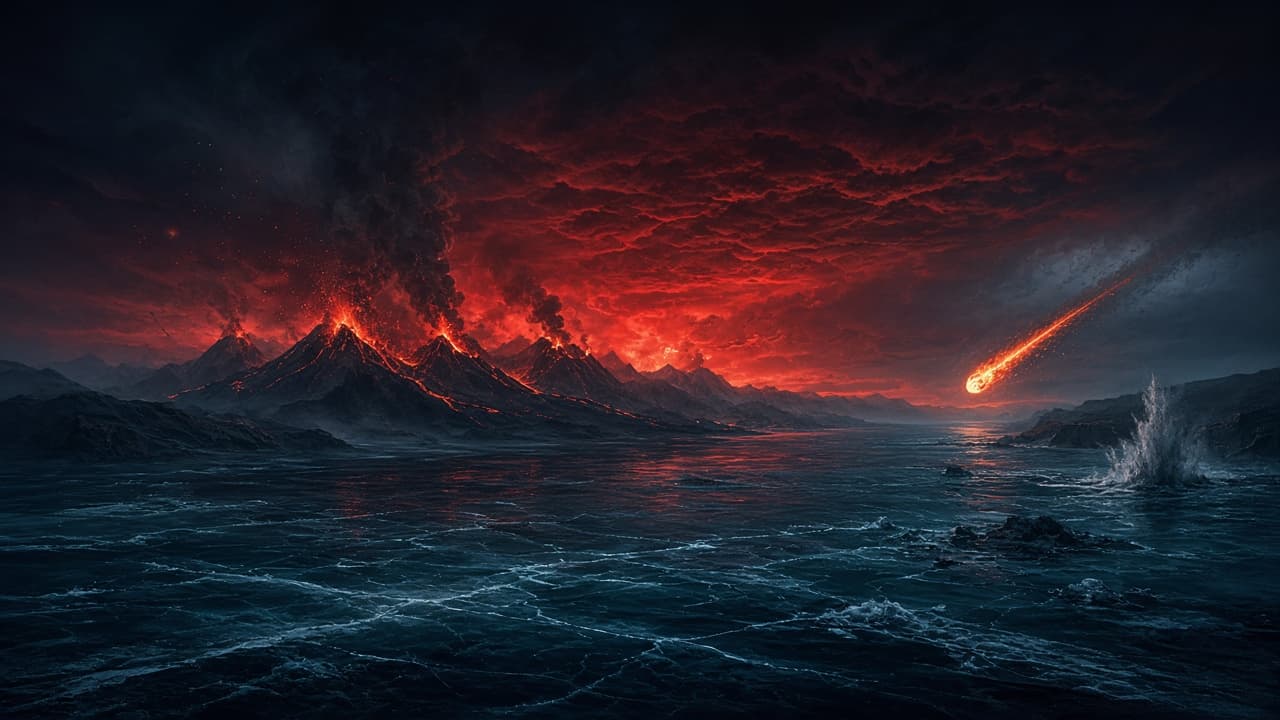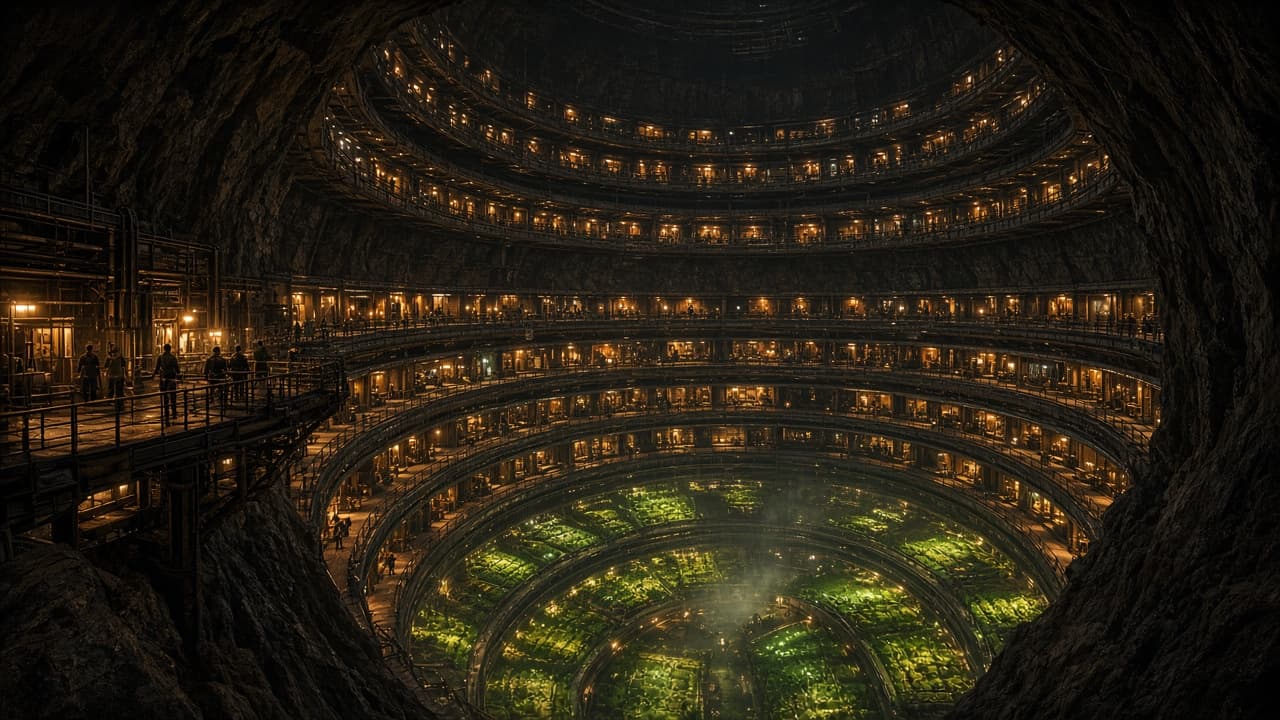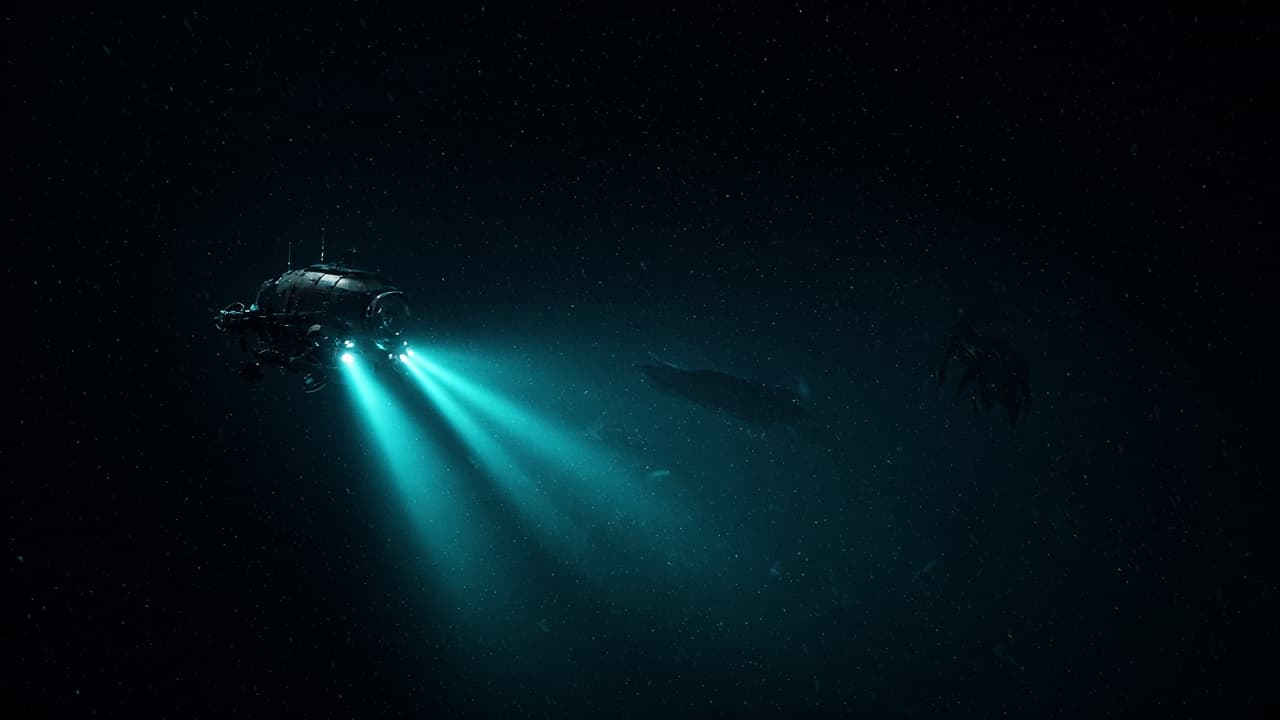
We are sending spacecraft across the Solar System to search for worlds that might contain life. But there is another alien world much closer to us—hidden beneath kilometers of seawater.
Mars is millions of kilometers away. Jupiter's moons are even farther. Yet scientists can study those worlds using spacecraft, telescopes, landers, and increasingly sophisticated instruments.
Meanwhile, beneath Earth's oceans is an environment so difficult to reach that exploring it can resemble visiting another planet. There is no sunlight, temperatures can approach freezing in many regions, pressure can become enormous, and communication with the surface becomes extremely difficult.
And this is the strange part: we already know that life exists there.
So the real question is not whether the deep sea contains life. It is: what else is down there that we haven't discovered yet?
When people imagine unexplored places, they often picture distant planets, unexplored moons, or galaxies billions of light-years away. But exploration does not always require leaving Earth.
The deep ocean is a three-dimensional environment covering enormous areas of the planet. Much of it is permanently dark, extremely cold, and under pressures that would be fatal to an unprotected human.
Unlike a desert or mountain range, the deep ocean also has another problem: it is hidden beneath kilometers of water. A researcher cannot simply walk into it. Reaching the seafloor often requires specialized ships, remotely operated vehicles, autonomous underwater vehicles, sensors, cameras, and pressure-resistant equipment.
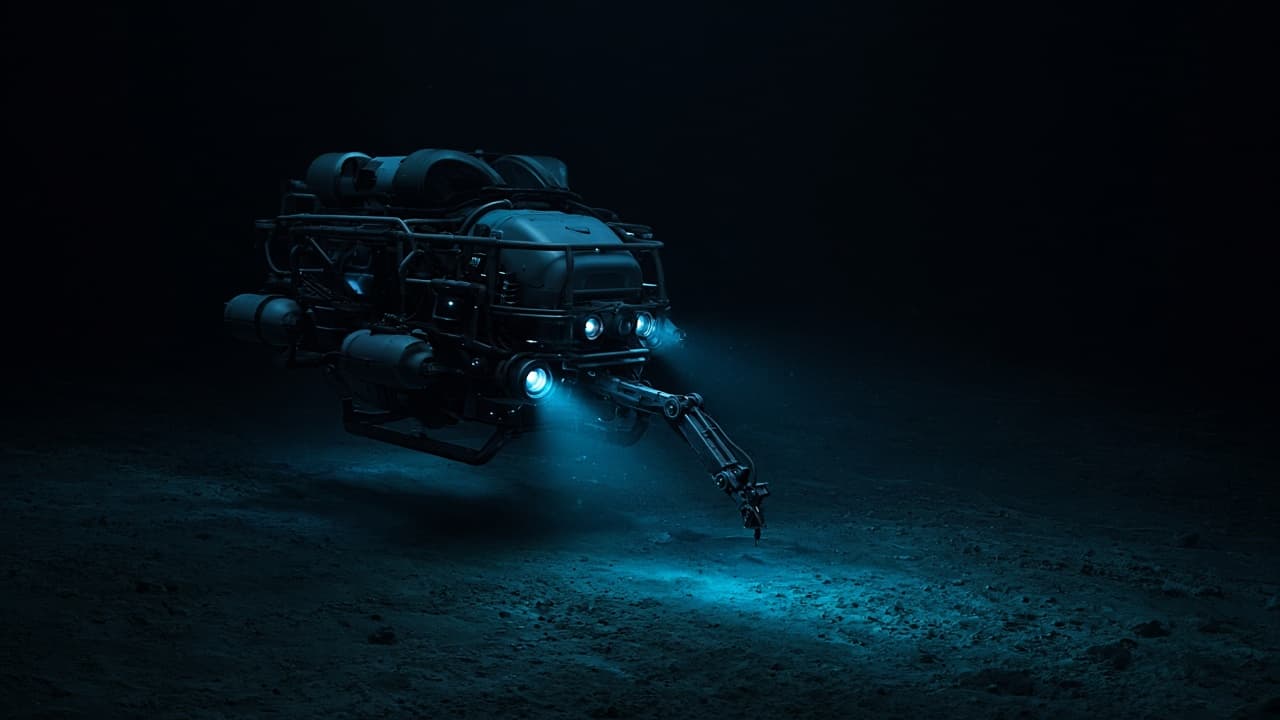
Imagine entering a research submersible and beginning a descent. At first, everything looks familiar. Sunlight illuminates the water, fish are visible, and microscopic organisms form the foundation of enormous food webs.
But the deeper you travel, the more dramatically the environment changes.
A Journey Through the Ocean's Depths
Surface to ~200 m
Sunlight Zone
Enough sunlight penetrates the water to support photosynthesis. This region supports highly productive marine ecosystems.
~200–1,000 m
Twilight Zone
Light rapidly decreases. Photosynthesis becomes impossible at sufficient depth, and many animals migrate vertically between deeper and shallower waters.
~1,000–4,000 m
Midnight Zone
Sunlight disappears. Animals depend on falling organic material, predation, migration, and other energy sources.
~4,000–6,000 m
Abyssal Zone
Vast areas of seafloor exist in darkness and cold, with life adapted to extremely limited food and high pressure.
~6,000–11,000 m
Hadal Zone
Deep ocean trenches form some of the most extreme environments on Earth.
On land, almost every ecosystem ultimately depends on energy from sunlight. Plants capture solar energy through photosynthesis, and animals obtain that energy by eating plants or other animals.
The deep sea forces life to play by different rules.
One major food source is marine snow: a continuous rain of organic particles descending from upper waters. Dead organisms, fragments of biological material, fecal particles, and other material slowly sink through the water column.
It sounds unimpressive compared with forests and grasslands, but this falling material helps connect surface ecosystems with the deep ocean.
Deep-sea animals have evolved extraordinary adaptations. Some have enormous mouths and teeth relative to their bodies. Others have flexible bodies, highly sensitive sensory systems, or the ability to produce their own light.
One of the most spectacular adaptations is bioluminescence—the production of light through chemical reactions.
In the deep ocean, light can become a weapon, a disguise, a communication system, or a lure. Some animals use it to attract prey. Others use flashes to startle predators or communicate with members of their species.
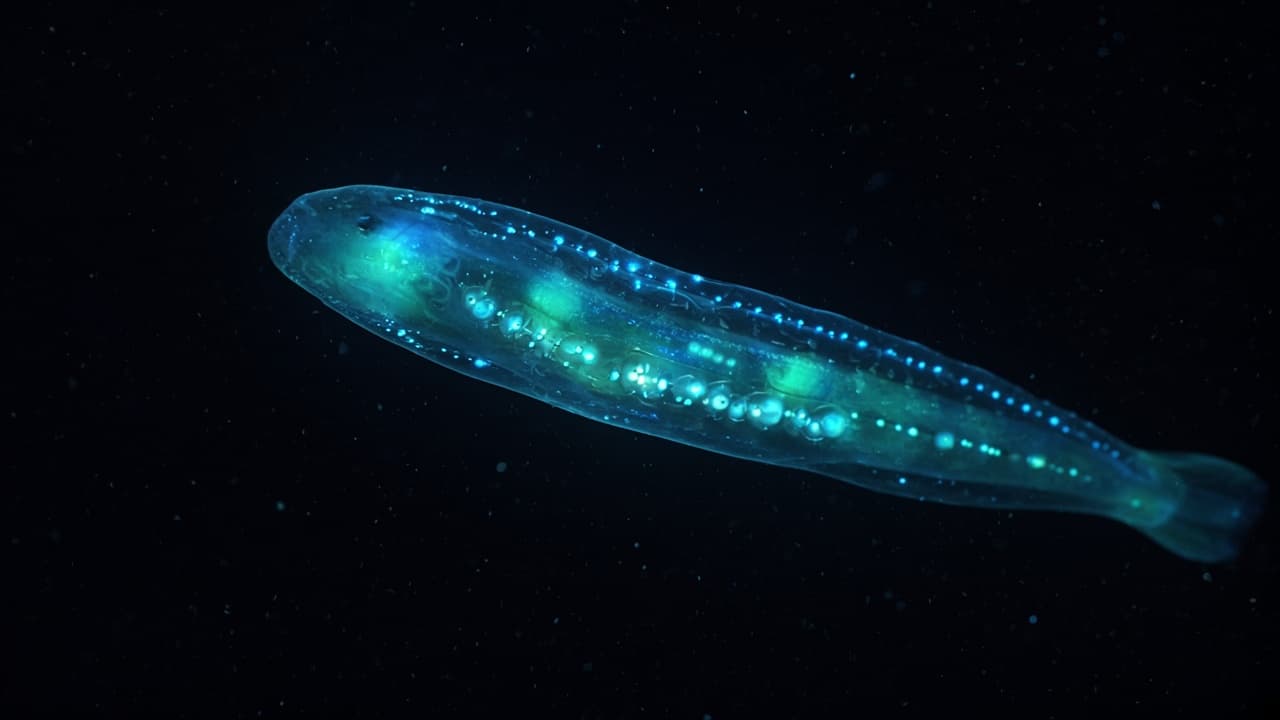
Despite its frightening name, the vampire squid is not a blood-drinking monster. It is a specialized deep-sea cephalopod adapted to environments where food and oxygen can be limited.
Rather than constantly chasing prey, it can collect organic particles from the surrounding water. In an environment where every calorie matters, conserving energy can be more valuable than speed.
At sea level, we live under approximately one atmosphere of pressure. In the deepest trenches, pressure becomes more than a thousand times greater.
A human body is not designed to operate directly under those conditions. Deep-sea organisms, however, have evolved cellular structures, membranes, proteins, and body compositions that allow them to function under extraordinary pressure.
~11 km
Approximate depth of Challenger Deep in the Mariana Trench
NOAA Ocean Exploration
At several kilometers below the surface, the seafloor can look almost lifeless. Vast plains of sediment stretch across the darkness.
But 'empty' does not mean 'lifeless.' Sea cucumbers, worms, crustaceans, microorganisms, and other organisms can live across these deep sediments.
The ecosystem simply operates at a different pace. Food is scarce, temperatures are low, and organisms often need to make every unit of energy count.
In some parts of the deep ocean, the food does not come primarily from the surface at all.
Hydrothermal vents occur where geologic activity allows seawater to interact with hot rocks beneath the seafloor. Hot, chemically rich fluids emerge through the ocean floor, creating strange structures surrounded by specialized ecosystems.
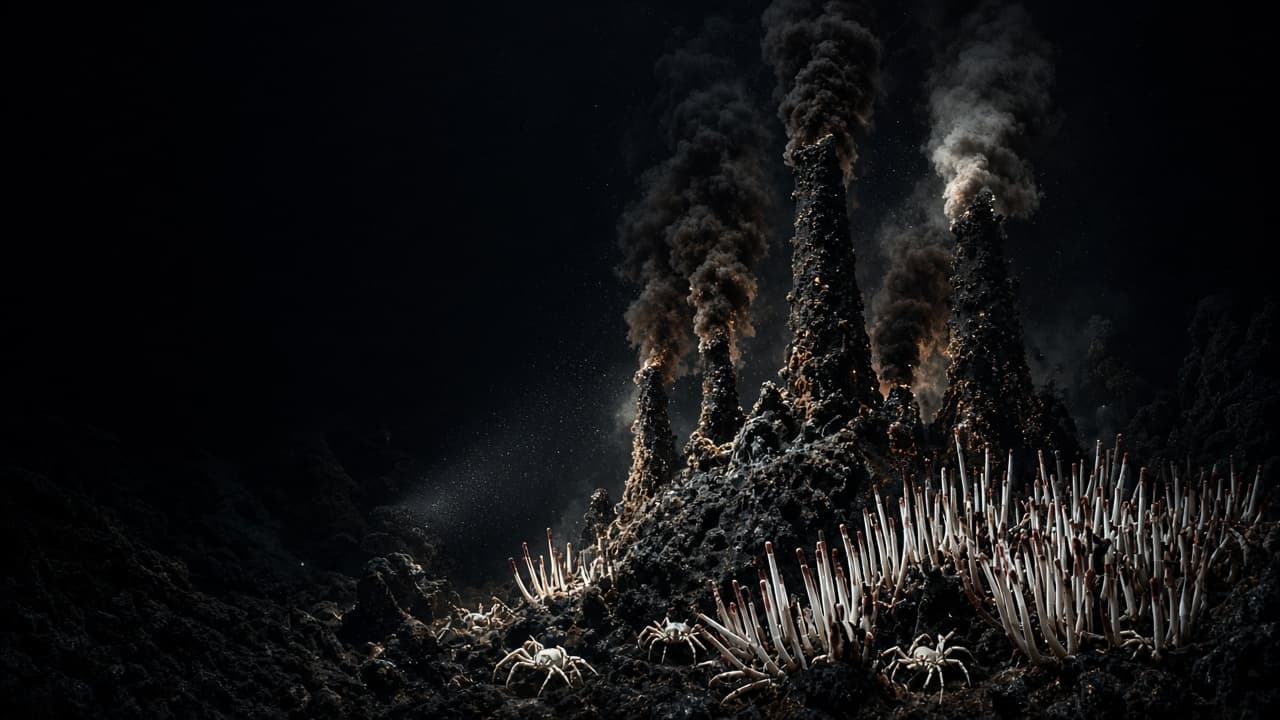
Here, microorganisms can obtain energy through chemosynthesis rather than photosynthesis. They use chemical reactions involving substances such as hydrogen sulfide to build organic matter.
Below roughly 6,000 meters lies the hadal zone, named after Hades, the ancient Greek underworld. It consists primarily of deep ocean trenches and represents some of the most extreme environments accessible on Earth.
The Mariana Trench contains Challenger Deep, reaching almost 11 kilometers below the ocean surface. Mount Everest could fit inside such a vertical distance with room to spare.
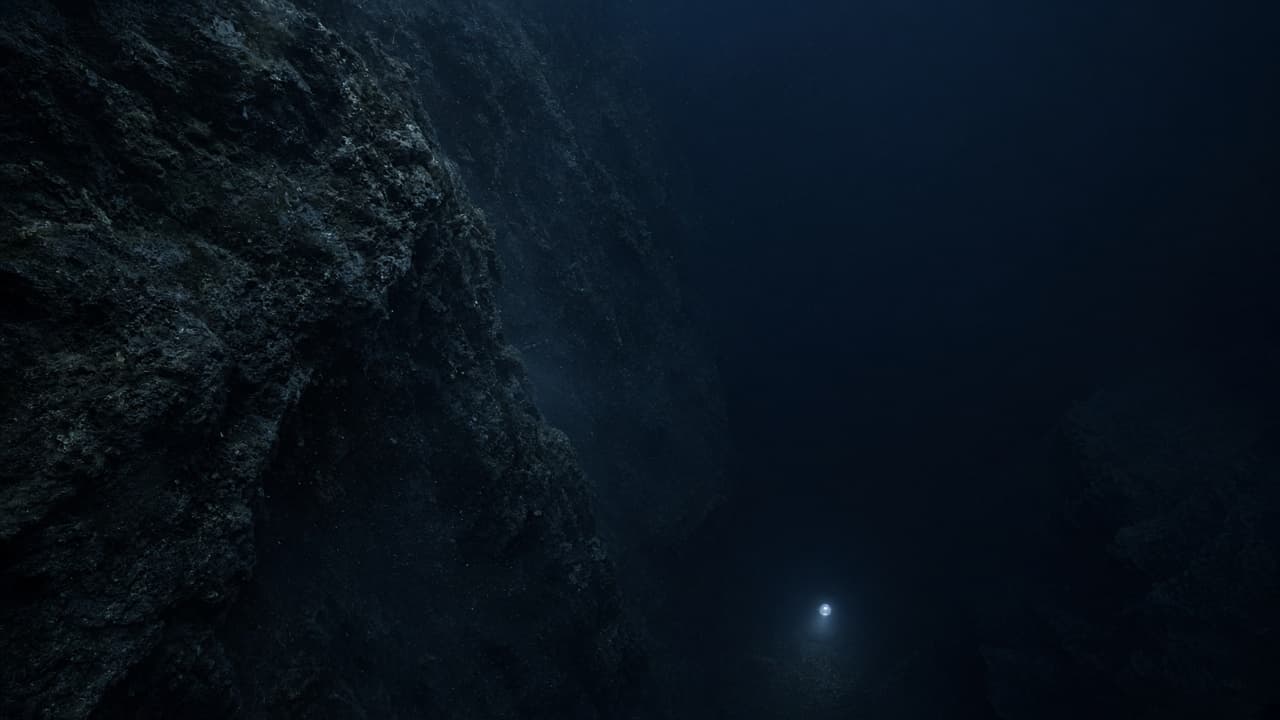
And yet, even here, scientists have observed living organisms.
This is where the original question becomes especially interesting.
It is not because scientists are ignoring the ocean. Oceanographers have been exploring the deep sea for decades. The challenge is that the deep ocean is an extraordinarily difficult environment for humans and machines.
- Extreme pressure can destroy ordinary equipment.
- Darkness makes visual observation difficult.
- Cold temperatures affect electronics and mechanical systems.
- Saltwater is corrosive.
- Underwater communication is much harder than radio communication through air.
- Ships, submersibles, remotely operated vehicles, and crews are expensive to operate.
- The ocean is enormous, making systematic exploration difficult.
| Challenge | Deep ocean | Space |
|---|---|---|
| Pressure | Can exceed 1,000 atmospheres in the deepest trenches | Near vacuum outside spacecraft |
| Visibility | Darkness dominates at depth | Space is naturally dark but distant objects can be observed remotely |
| Communication | Radio signals do not travel efficiently through seawater | Radio communication works well through space |
| Environment | Cold, corrosive, high-pressure saltwater | Vacuum, radiation, extreme thermal conditions |
| Access | Requires ships, submersibles, or underwater robots | Requires launch vehicles and spacecraft |
This question needs an important distinction. Scientists have mapped large portions of the seafloor using remote sensing, but high-resolution mapping and direct visual or biological exploration are very different things.
Knowing that a region exists on a map does not mean we have visited it, photographed its ecosystems, sampled its sediments, identified its organisms, and understood how its biological communities function.
This is one reason the deep ocean remains scientifically exciting. Every new expedition can encounter unfamiliar habitats, species, behaviors, geological structures, or chemical processes.
We should be careful here. Science cannot tell us that a giant unknown monster is waiting in the deepest trench. There is no evidence for that.
But there are many discoveries that are much more realistic—and arguably more exciting.
- Previously unknown species.
- New microbial communities.
- Novel biochemical compounds.
- Unrecognized deep-sea ecosystems.
- New adaptations to extreme pressure.
- Previously unknown interactions between organisms.
- New geological environments.
- Biological processes that could improve our understanding of life under extreme conditions.
This may be the most surprising connection.
Scientists studying potential life beyond Earth often examine extreme environments on our own planet. Hydrothermal vents, acidic lakes, polar environments, and deep subsurface habitats provide natural laboratories for understanding how organisms survive conditions once considered impossible.
This matters because several worlds in our Solar System may contain subsurface oceans. Jupiter's moon Europa and Saturn's moon Enceladus are especially interesting because scientists have evidence of internal oceans and environments that could potentially provide conditions relevant to habitability.
The deep ocean therefore gives us something space telescopes cannot: a nearby laboratory where we can study life under darkness, high pressure, chemical stress, and limited energy.
There is an uncomfortable discovery waiting at the bottom of this story.
Human influence can reach places that seem impossibly remote. Scientists have documented human-made debris, including plastic, in deep ocean environments.
The deepest parts of Earth are not isolated from the surface in the way we might imagine. Material moves through ocean currents and food webs, and human pollution can eventually reach even distant environments.
Perhaps the most interesting thing about the deep sea is that we do not need to invent a science-fiction scenario to make it mysterious.
The real ocean already contains ecosystems powered without sunlight, animals that manufacture their own light, organisms adapted to crushing pressure, enormous geological structures, unexplored trenches, and countless species that scientists are still working to identify.
And every improvement in underwater robotics, artificial intelligence, autonomous vehicles, imaging systems, sensors, and sampling technology gives researchers a better way to explore it.
How Future Deep-Sea Exploration Could Change
Smarter Autonomous Vehicles
Autonomous underwater vehicles could survey enormous areas without requiring a human pilot to remain connected to the vehicle.
AI-Assisted Discovery
Machine-learning systems could help identify organisms, geological structures, and unusual patterns in huge volumes of underwater imagery.
Better Deep-Sea Sensors
Advanced sensors could continuously measure pressure, temperature, chemistry, currents, and biological activity.
Long-Duration Missions
Future systems could remain underwater for much longer periods, allowing scientists to observe ecosystems instead of capturing only short snapshots.
A Global Deep-Ocean Map
Combining autonomous vehicles, sonar, satellites, and direct observations could produce increasingly detailed maps of the seafloor and its ecosystems.
We often talk about humanity's search for extraterrestrial life as though discovery requires leaving Earth.
But perhaps one of our greatest scientific discoveries is waiting in an environment we have barely been able to observe.
The deep ocean is not another planet. It is part of our planet. Yet its darkness, pressure, scale, and isolation make it feel alien.
And unlike Mars, we already know that life exists there.
The next extraordinary discovery may not come from a telescope pointed at the stars. It could come from a small underwater robot descending into darkness, turning on its lights, and revealing something no human has ever seen before.
Frequently asked questions
Why is the deep sea so difficult to explore?
What is the deepest point in the ocean?
Can animals live without sunlight in the deep ocean?
Are there still undiscovered species in the deep sea?
Is the deep sea more unexplored than space?
Why does deep-sea research matter for space exploration?
What is marine snow?
What are hydrothermal vents?
Could the deep ocean contain completely new forms of life?
What deep-sea exploration can and cannot easily do
What works
- Deep-sea exploration can reveal new species and ecosystems.
- Research can improve our understanding of how life survives extreme environments.
- Ocean exploration can contribute to climate, geological, biological, and environmental science.
- Deep-sea research can inform the search for life on ocean worlds beyond Earth.
What doesn't
- Deep-sea research is expensive and technically difficult.
- Human access is extremely limited at the greatest depths.
- Exploration itself can disturb fragile environments if not carefully managed.
- Large portions of the deep ocean remain difficult to study directly.
Humanity has spent centuries looking toward the horizon, then toward the sky, and now toward distant planets and moons. But one of Earth's greatest frontiers is still directly beneath us.
The deep sea is dark, enormous, hostile, and surprisingly alive. It contains organisms that produce their own light, ecosystems that can function without sunlight, and environments capable of testing the limits of biology.
We do not need to imagine monsters or mythical civilizations to make the deep ocean mysterious. The reality is already extraordinary.
Maybe the most exciting question is not 'Are we alone in the universe?' Maybe it is also: 'How much life have we still not discovered on our own planet?'